- Introduction
- 5 Ways to Take Care of Velvet Clothes Properly
- Quick Velvet Care Tips
- How to Protect Velvet Fabric from Damage
- How to Take Care of Velvet Clothes with Stones
- Common Mistakes to Avoid When Taking Care of Velvet Clothes
- How to Take Care of Velvet Couch
- Home Washing vs. Dry Clean for Velvet. What Works Best
- Conclusion
Introduction
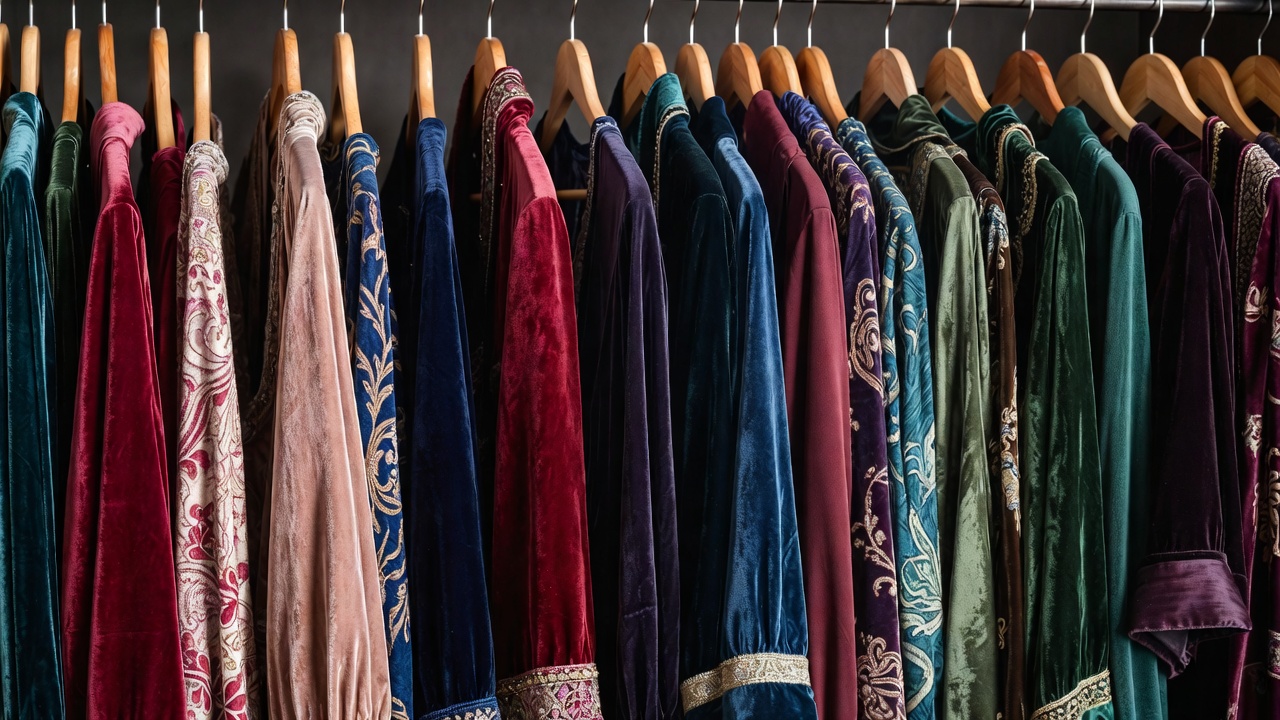
Velvet is known for its rich look and soft feel, but it is also one of the fabrics that shows damage the fastest when handled incorrectly. From flattened patches to faded colour, most velvet damage is not caused by wear but by everyday care mistakes. These issues often appear after just one or two wears.
Velvet has a raised surface called a pile. This pile reacts strongly to heat, moisture, and pressure. Once the fibres bend or flatten, they do not recover easily. This is why velvet requires a different care approach compared to regular fabrics, especially in warm or humid conditions. This guide explains how to take care of velvet clothes properly so the fabric keeps its texture, colour, and softness over time.
5 Ways to Take Care of Velvet Clothes Properly
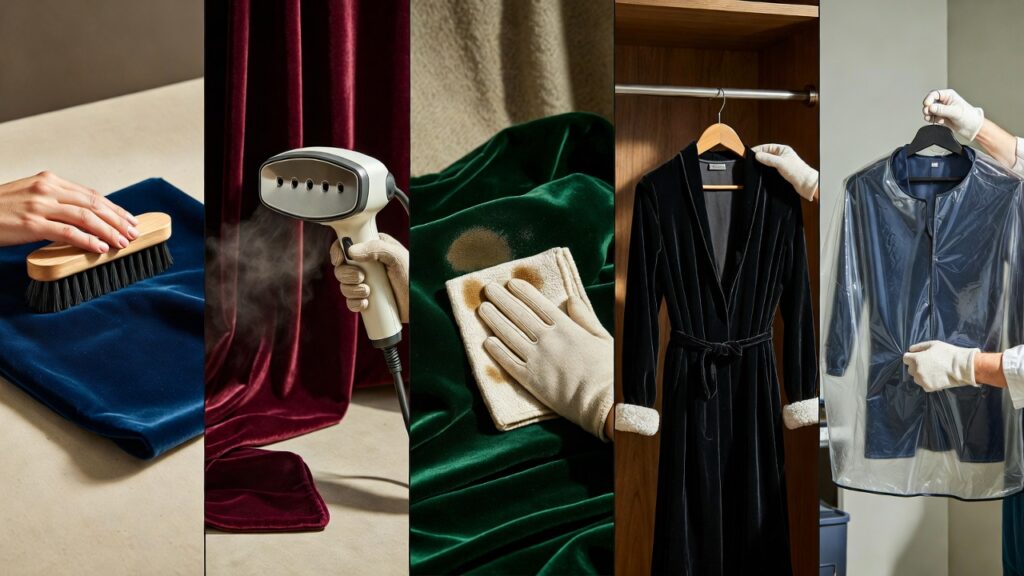
Velvet care is less about frequent cleaning and more about correct handling. In fabric care settings, velvet garments are often brought in after damage has already occurred. In most cases, the fabric itself is still strong, but the pile has been affected by pressure, heat, or moisture. The steps below focus on preventing this type of damage.
1. Brush Velvet Gently and in One Direction
Velvet fibres naturally shift and lie flat in areas that face repeated contact, such as shoulders, elbows, and seating areas. This is commonly seen even on new garments after a single event. Gentle brushing helps lift the pile and restore an even surface, but it must always be done in one direction and only when the fabric is completely dry.
Brushing is one of the simplest ways to take care of velvet clothes properly without using water or heat.
2. Steam Instead of Ironing
Ironing applies direct heat and pressure, which forces velvet fibres to flatten. Unlike cotton or linen, velvet pile does not spring back once compressed. Steaming works differently. The moisture in steam relaxes the fibres without pressing them down, allowing the fabric to regain its shape gradually. This is why fabric care professionals avoid ironing velvet directly.
Steaming is recommended by professionals because it helps take care of velvet clothes properly while protecting the pile from pressure damage.
3. Handle Stains Carefully
Velvet absorbs oils and fine particles quickly, which makes stains harder to remove with home methods. Rubbing or scrubbing spreads the stain deeper into the pile and damages the surface texture. In many cases, the visible mark is less harmful than the fibre damage caused by repeated cleaning attempts. Blotting gently and stopping early reduces long-term damage.
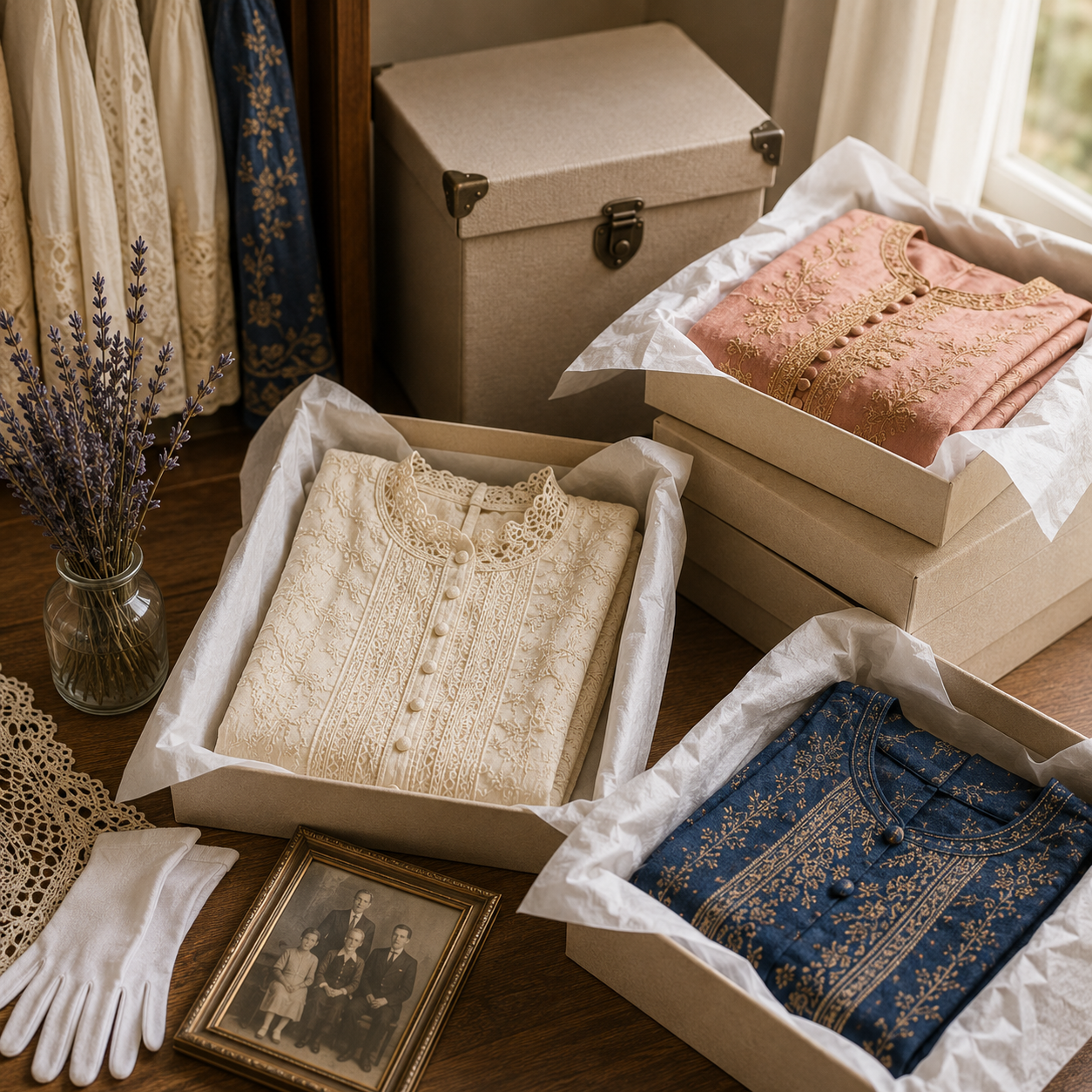
4. Store Velvet the Right Way
Improper storage is one of the most common causes of long-term velvet damage. When velvet garments are folded tightly or hung on thin hangers, pressure builds in specific areas. Over time, this creates permanent creases and flat patches. Padded hangers and flat storage distribute weight more evenly and help preserve the pile.
5. Choose Professional Cleaning When Needed
For expensive or delicate velvet garments, professional dry cleaning is the safest option. It preserves the fabric structure and prevents shrinkage or colour bleeding.
When you take care of velvet clothes properly using gentle handling, correct storage, and limited cleaning, the fabric lasts significantly longer and retains its rich appearance.
Quick Velvet Care Tips
- Always brush velvet when it’s completely dry
- Avoid exposing velvet to moisture and humidity
- Never wring or twist velvet fabric
- Keep velvet away from direct sunlight
- When unsure, opt for professional dry cleaning
How to Protect Velvet Fabric from Damage

Most velvet damage happens gradually, not suddenly. Daily friction, exposure to sunlight, and trapped moisture slowly break down the pile. In humid environments, velvet is especially vulnerable if airflow is restricted. Learning how to protect velvet fabric from damage reduces the need for frequent cleaning and prevents permanent texture loss. Protecting velvet fabric from damage depends largely on controlling these everyday factors.
Knowing how to protect velvet fabric from damage can save you from costly mistakes.
Velvet is highly sensitive to friction. Accessories like bags, belts, or even constant sitting can flatten the pile. Sunlight can fade deep colours, while moisture can leave watermarks that are difficult to fix.
To protect velvet:
- Avoid wearing velvet in heavy rain or humid conditions
- Keep velvet garments covered when stored
- Rotate usage to reduce pressure on one area
- Always allow velvet to air-dry naturally
Prevention is the key when it comes to velvet care.
How to Take Care of Velvet Clothes with Stones
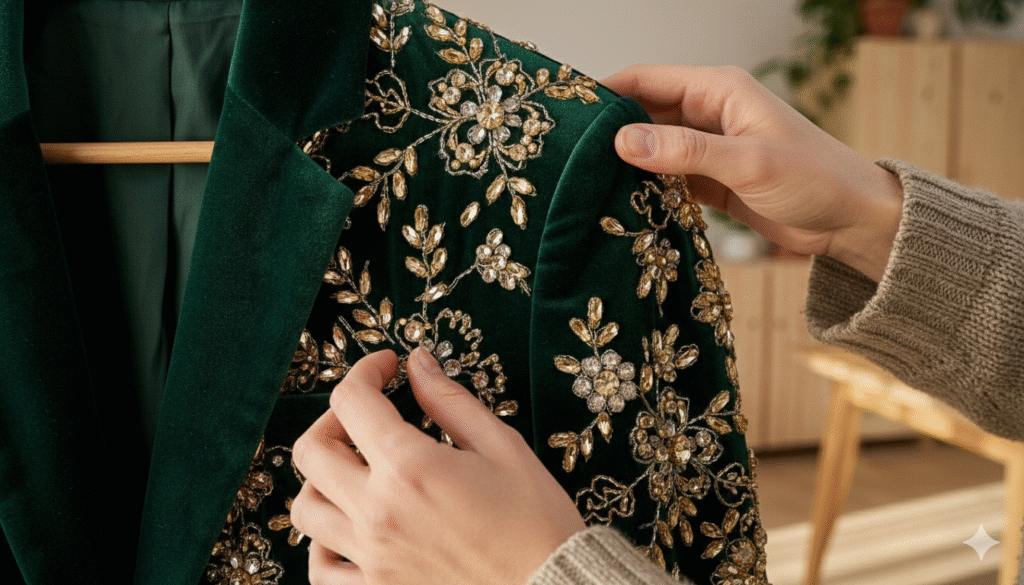
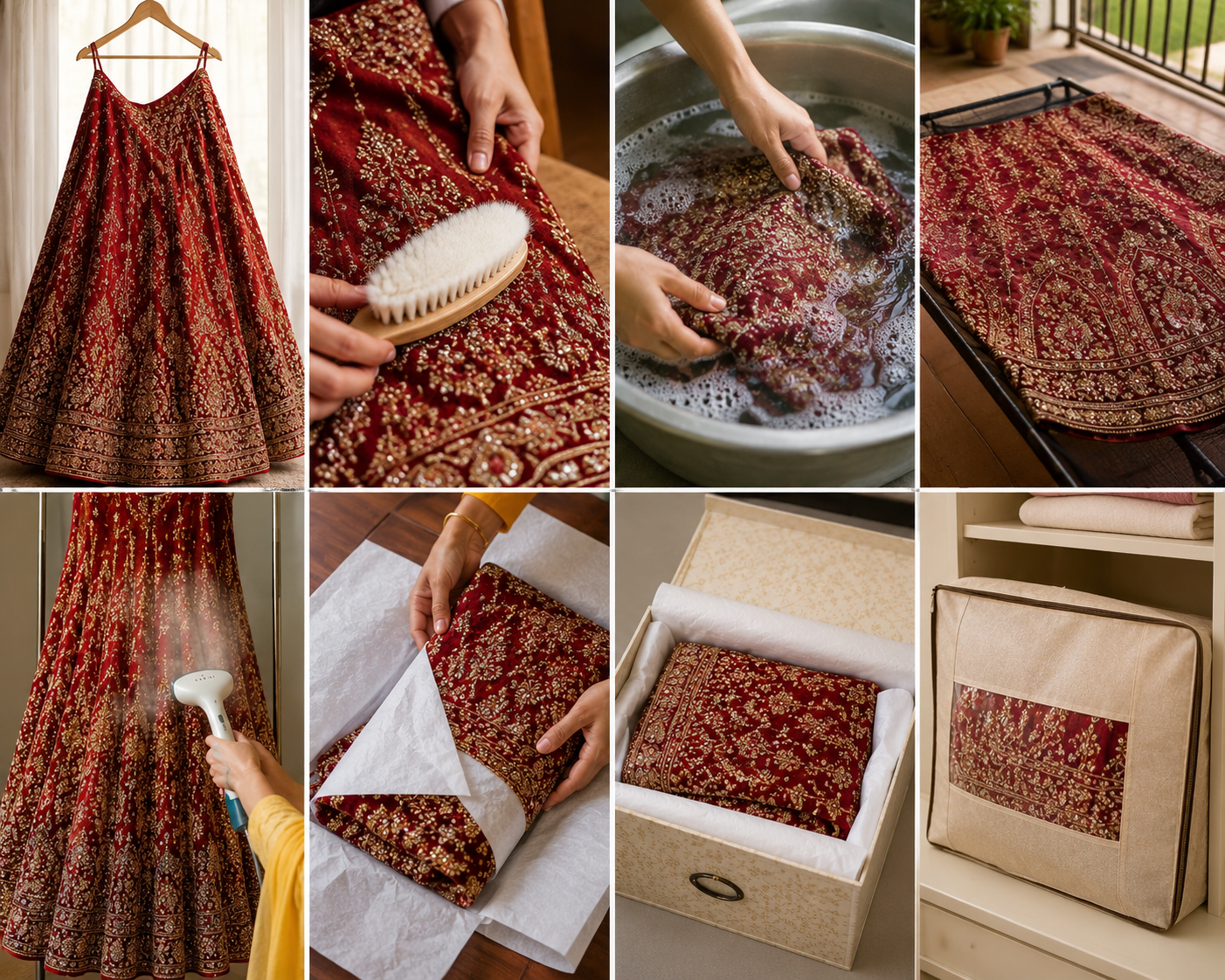
Velvet clothes with stones or embroidery combine delicate fabric with fragile attachments. In professional cleaning environments, damage to embellished velvet is most often linked to water exposure or heat. Adhesives soften when wet, and embroidery threads weaken under pressure. This is why home washing carries a high risk for stone-work velvet garments. Understanding how to take care of velvet clothes with stones helps prevent stone loss, dull embroidery, and fabric weakening.
If you’re wondering how to take care of velvet clothes with stones, here’s what to remember:
- Never wash embellished velvet at home
- Avoid steaming directly over stonework
- Store embellished velvet flat to prevent pulling
- Always choose professional dry cleaning for safety
Home washing can loosen stones, dull embellishments, and damage embroidery beyond repair.
Common Mistakes to Avoid When Taking Care of Velvet Clothes
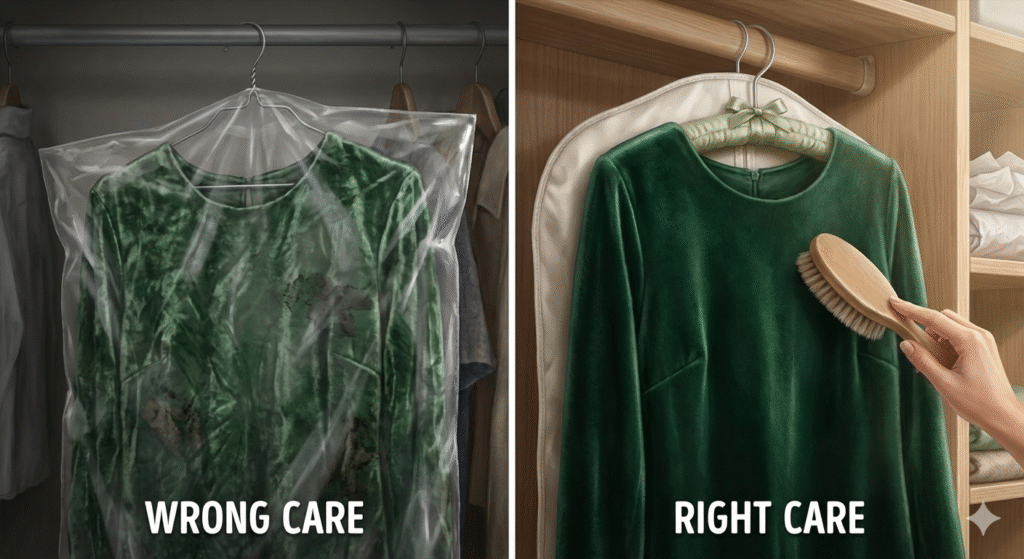
Many velvet garments show damage that could have been avoided with small changes in care. These mistakes are usually unintentional and often based on treating velvet like regular fabric. Understanding what not to do is just as important as knowing the correct care steps. Many people damage velvet unknowingly. Here are some common mistakes to avoid when taking care of velvet clothes:
- Ironing directly on velvet fabric
- Rubbing stains aggressively
- Using fabric softeners or harsh detergents
- Hanging heavy velvet garments for long periods
- Storing velvet in plastic covers
Avoiding these mistakes can significantly extend the life of your velvet clothes. These are the most common mistakes to avoid when taking care of velvet clothes, and they often cause irreversible damage.
Also see: Best Fabric Care Tips for Woollen Clothes in Delhi Winters
How to Take Care of Velvet Couch
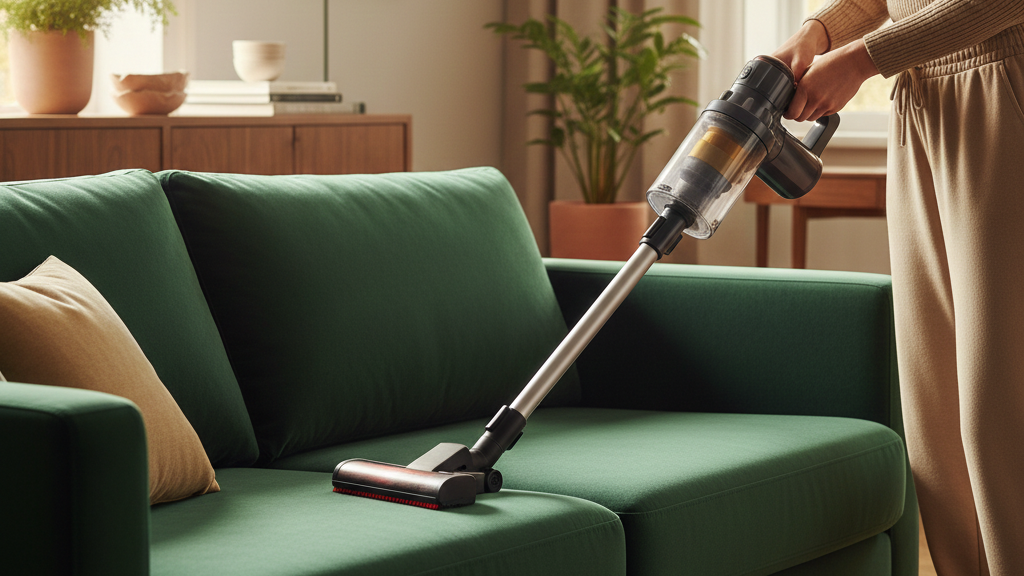
Velvet upholstery experiences constant pressure, which makes regular maintenance essential. Flat areas often develop where people sit most frequently, not because the fabric is poor quality but due to compressed pile. Light brushing and rotation of cushions help reduce uneven wear and extend the life of a velvet couch.
For daily maintenance:
- Vacuum gently using an upholstery attachment
- Brush the pile occasionally to prevent flattening
- Blot spills immediately without rubbing
For deep cleaning, professional upholstery cleaning is recommended, especially for light-coloured or premium velvet couches. Knowing how to take care of a velvet couch correctly helps maintain its appearance despite daily use.
Also see: 5 Non-Clothing Items That Need Professional Dry Cleaning
Home Washing vs. Dry Clean for Velvet, What Works Best? – The Vanzoo Experience
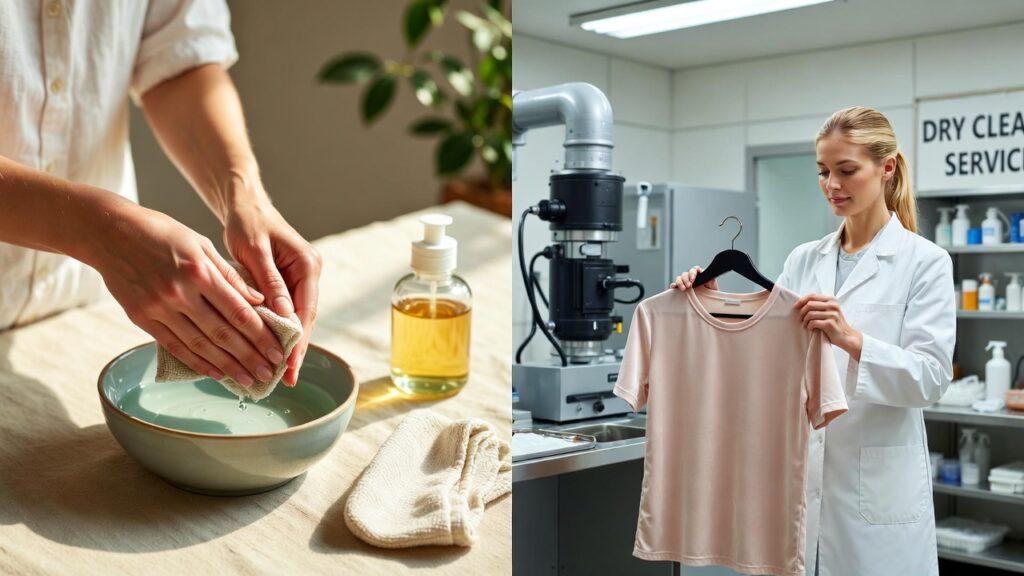
Home washing exposes velvet to water saturation, agitation, and uneven drying. These factors affect the pile structure and can lead to shrinkage or texture loss. Dry cleaning avoids direct water exposure and limits friction, which is why it is widely recommended for natural velvet fabrics, embellished garments, and luxury pieces.
Home washing may be suitable only for some synthetic velvets, and even then, it comes with risks like shrinkage and texture loss.
Dry cleaning, on the other hand, is ideal for:
- Silk or cotton velvet
- Embellished velvet clothes
- Luxury garments and upholstery
If you want to truly take care of velvet clothes properly, dry cleaning is the safest and most reliable option.
Dry cleaning is usually recommended when the goal is to take care of velvet clothes properly without risking pile damage.
Conclusion
Velvet is a fabric that rewards careful handling. With the right approach, you can protect velvet fabric from damage, maintain its rich texture, and enjoy its elegance for years.
Velvet care is not about doing more. It is about doing the right things at the right time. Gentle handling, proper storage, and knowing when to seek professional cleaning help preserve the fabric’s texture and appearance. When velvet is cared for correctly, it continues to look rich and refined for years. When you take care of velvet clothes properly and avoid common handling mistakes, velvet remains elegant, soft, and long-lasting.