- Introduction
- The “Before” Condition: What Happened to This Vintage Coat
- Why Home Washing Makes Vintage Damage Worse
- Can Vintage Pieces Be Restored Once Damaged?
- The Restoration Process (Behind the Scenes)
- The “After” Transformation
- How Much Does It Cost to Restore Damaged Vintage Clothes?
- Why Non-Toxic Methods Matter for Vintage Garments
- When Should You Choose Professional Restoration?
- Common Mistakes People Make with Vintage Coats
- Conclusion
- FAQs
- Key Takeaways
Introduction
There’s something special about vintage coats. They carry stories – maybe it was your grandmother’s favorite winter coat, or a classic piece you found at a thrift store that just felt meant to be yours.
But here’s the problem: Time isn’t kind to old fabrics. That beautiful wool coat starts fading. The fabric gets stiff. A musty smell settles in. The shoulders sag. You want to wear it again, but it just doesn’t look or feel right anymore.
And washing it at home? That’s risky. One wrong wash can permanently damage the structure, shrink the wool, or ruin the lining forever.
This is the story of how Vanzoo’s non-toxic methods revived a vintage coat from forgotten to fabulous. A real transformation that shows what’s possible when you choose professional restoration over DIY risks.
The “Before” Condition: What Happened to This Vintage Coat
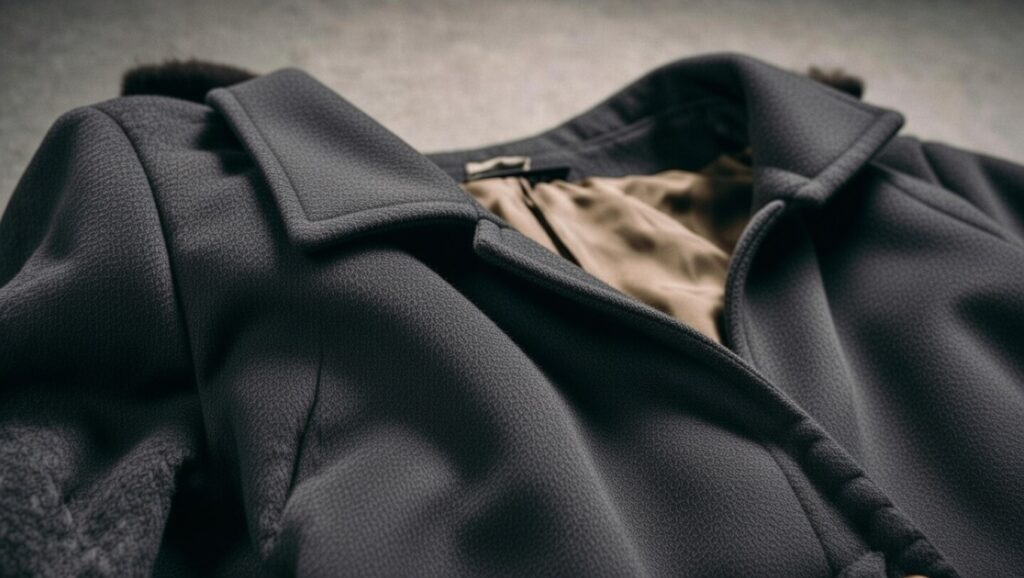
The coat that came to Vanzoo had been stored in a closet for over 8 years. It was a beautiful 1980s wool blend coat – the kind of quality craftsmanship you rarely find in modern fast fashion.
Common signs of damage we found:
- Faded and uneven color: What was once a rich camel brown had turned pale and patchy
- Strong musty storage odor: That unmistakable smell of clothes left in a closed space too long
- Stiff, rough wool texture: The soft wool had become scratchy and uncomfortable
- Yellowing lining: The interior silk lining had oxidized and turned yellowish-brown
- Shoulder sagging: The structured shoulders had collapsed and lost their shape
- Hidden oxidation stains: Light brown spots appeared on the collar and cuffs
This isn’t unusual. Most vintage pieces show these exact problems after years of storage.
Why older fabrics are more fragile:
Wool, cashmere, and vintage tweed blends aren’t like modern synthetic fabrics. Over time, natural fibers lose moisture and elasticity. The protective oils in wool dry out. Exposure to air causes slow oxidation that weakens the fabric structure.
Add storage conditions – humidity, dust, lack of air circulation – and you get fabric degradation even without wearing the coat.
Real example: The coat’s owner, Mrs. Sharma from Delhi, had inherited it from her mother. She wanted to wear it again but was heartbroken seeing its condition. “It doesn’t even look like the same coat anymore,” she said. “I was ready to throw it away, but it meant too much to me.”
That’s the emotional weight vintage pieces carry. They’re not just clothes – they’re memories.
Why Home Washing Makes Vintage Damage Worse
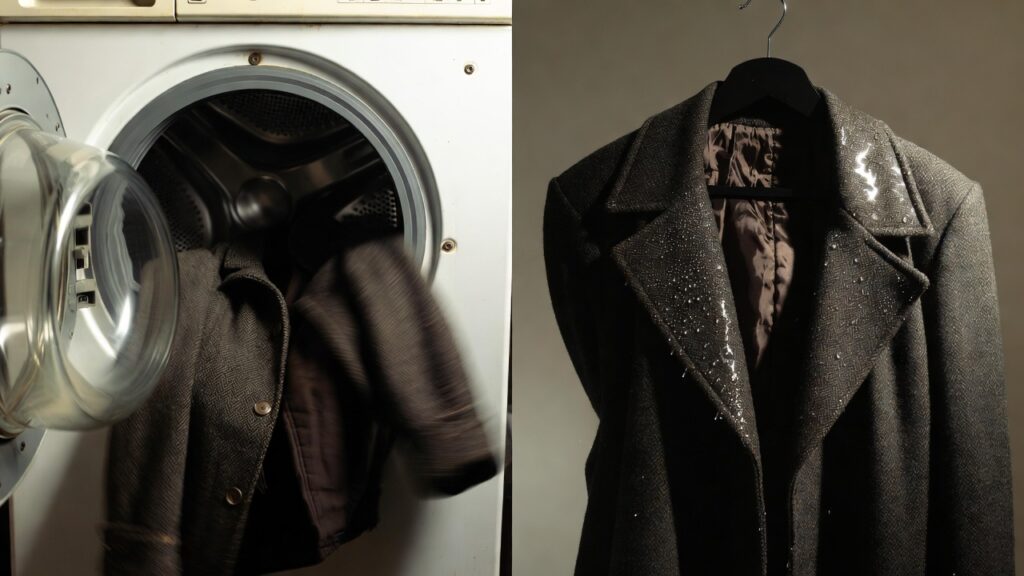
When people see a dirty or smelly vintage coat, the first thought is usually: “Let me just wash it once and it’ll be fine.”
This almost always makes things worse. Much worse.
What happens when you home wash vintage coats:
- Shrinkage (especially wool): Wool fibers have scales that expand in water. Agitation makes them lock together, causing permanent shrinkage of 10-30%
- Dye bleeding: Vintage dyes weren’t color-fast like modern ones. Water causes colors to run and fade
- Distorted lining: The outer coat and inner lining shrink at different rates, creating puckering and warping
- Padding collapse: Shoulder pads and chest padding absorb water, lose shape, and never recover
- Permanent fiber weakening: Water and agitation break down already-fragile vintage fibers
The science of the damage:
When wool gets wet, the fibers swell up to 30% larger than normal. Add the spinning and tumbling of a washing machine, and these swollen fibers get tangled and matted together. This is called felting – and it’s permanent.
Vintage coat linings are usually silk or rayon. These fabrics react completely differently to water than wool. While the wool shrinks, the lining might stretch or pucker. The result? A coat that doesn’t fit right and looks distorted.
What happened to someone who tried: Rajesh from Mumbai washed his father’s vintage tweed coat “just once on gentle cycle.” The coat shrunk 2 sizes. The sleeves became too short. The lining bunched up inside. The shoulders lost all structure. A coat worth ₹15,000 if restored properly became completely unwearable. All from one home wash.
| Home Washing Risk | Why It Happens | Can It Be Fixed? |
| Wool shrinkage | Fiber felting in water | Usually permanent |
| Color fading | Vintage dyes not water-stable | Permanent |
| Lining distortion | Different fabric shrink rates | Sometimes with resteaming |
| Lost structure | Padding absorbs water | Rarely recovers |
| Fiber damage | Agitation breaks weak fibers | Permanent |
The lesson? Don’t risk it. Vintage coats need professional care, period. This is precisely why trusting experts matters when it comes to How Vanzoo’s Non-Toxic Methods Revived a Vintage Coat without causing further harm.
Can Vintage Pieces Be Restored Once Damaged?
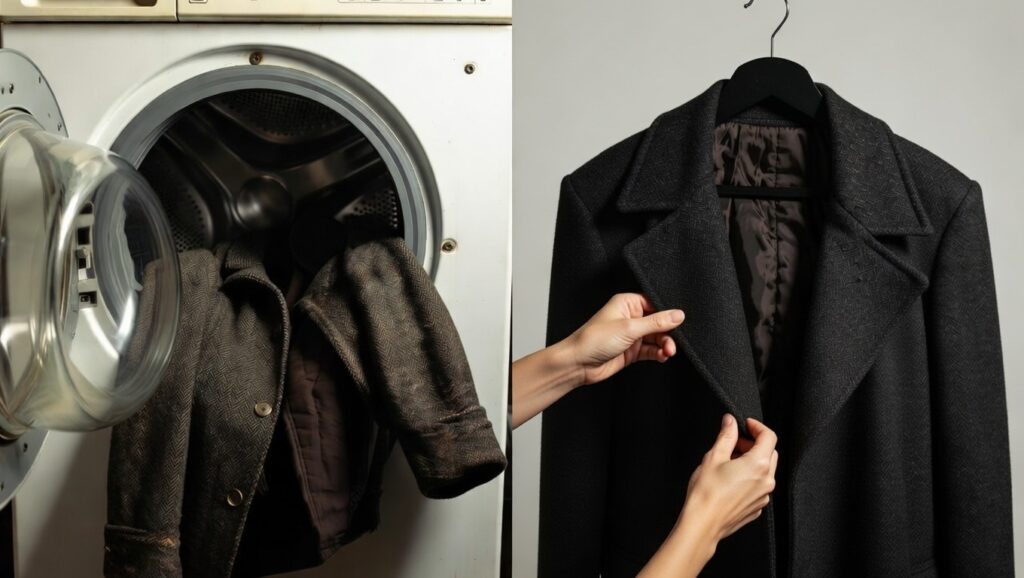
This is the question everyone asks: “Is it too late? Can my vintage coat still be saved?”
The short answer: Yes, most vintage damage can be restored – but it depends on the type and how severe it is.
Damage That Can Often Be Restored
Good news first – these issues are usually fixable:
- Musty odor: Non-toxic dry cleaning removes storage smells completely
- Minor shrinkage: Professional steaming can relax fibers and regain some size
- Oxidation stains: Gentle pre-treatment lifts yellowing and brown spots
- Fabric stiffness: Proper cleaning restores natural oils and softness
- Color dullness: Cleaning revives original vibrancy without harsh chemicals
- Structural sagging: Steam reshaping rebuilds shoulder and lapel structure
These are the most common problems in stored vintage coats, and they respond well to expert restoration.
Damage That May Be Permanent
Unfortunately, some damage can’t be reversed:
- Severe fiber breakdown: When wool or cashmere is completely degraded and brittle
- Melted synthetic blends: Heat damage from improper ironing can’t be undone
- Deep chemical burns: Bleach stains or harsh cleaner damage
- Extreme shrinkage: Coat shrunk more than 2-3 sizes from home washing
- Moth holes: Actual fabric loss from insect damage (though can be repaired by tailors)
The critical factor: Early intervention
The sooner you address vintage coat damage, the better the restoration results. A coat stored badly for 2 years is easier to revive than one neglected for 20 years.
Oxidation stains that look light yellow today will turn dark brown and set permanently in a few more years. Mild stiffness that feels slightly rough now will become completely brittle fabric later.
Professional assessment makes the difference:
Professional services like Vanzoo assess fiber health before cleaning. They test dye stability, check fabric strength, examine lining condition, and inspect structural elements. This prevents further damage and determines the best restoration approach.
Not all vintage coats can be saved, but most can – if you act before the damage becomes irreversible.
Success story: A customer brought in her grandfather’s 1970s cashmere coat that had been in a trunk for 15 years. It smelled terrible, felt stiff, and had yellow stains everywhere. Vanzoo’s assessment showed the cashmere fibers were still strong despite the surface damage. After non-toxic restoration, the coat looked and felt nearly new. “I actually cried when I saw it,” the customer said. “It’s like having a piece of him back.” The transformation proves that How Vanzoo’s Non-Toxic Methods Revived a Vintage Coat is not just a claim, but a carefully executed restoration process.
The Restoration Process (Behind the Scenes)

What actually happens when you send a vintage coat for professional restoration? Let’s walk through how Vanzoo’s non-toxic methods revived a vintage coat step by step.
Step 1: Fabric & Structure Assessment
Before any cleaning, experts examine every detail of the coat.
What gets checked:
- Fiber testing: Identifying exact fabric composition (wool, cashmere, blends)
- Lining inspection: Checking for tears, yellowing, or separation
- Dye stability check: Testing if colors will bleed during cleaning
- Button and trim condition: Ensuring embellishments can withstand the process
- Structural integrity: Examining shoulder pads, interfacing, and seam strength
This assessment determines the exact cleaning method needed. Not all vintage coats can handle the same treatment.
Step 2: Targeted Stain Treatment
Stubborn stains get special attention before the main cleaning.
Pre-treatment process:
- Oxidation removal: Gentle solutions break down yellow and brown age stains
- Spot treatment: Individual stains get targeted cleaning
- Gentle agitation: Hand-brushing, never machine scrubbing
- pH-neutral products: No harsh acids or bases that damage vintage fibers
The key is patience. Vintage stains didn’t appear overnight, and they don’t come out instantly either.
Step 3: Non-Toxic Cleaning Process
This is where eco-friendly cleaning vintage revival happens.
Hydrocarbon dry cleaning method:
- No harsh water agitation: Gentle solvent cleaning that doesn’t cause felting or shrinkage
- Controlled temperature: Cool process that protects delicate fibers
- Fiber-safe stain lifting: Removes dirt and odor without stripping natural oils
- Non-toxic solvents: Hydrocarbon-based cleaners with no harsh chemicals
Unlike traditional dry cleaning that uses perchloroethylene (a toxic chemical), Vanzoo’s toxin-free cleaning before after results show you can achieve amazing restoration without harmful substances.
Step 4: Steam Restructuring
After cleaning, the coat needs reshaping.
Professional finishing techniques:
- Restore shoulders: Steam and pressing rebuild the structured shoulder shape
- Relax wrinkles: Gentle steaming removes creases without crushing fabric
- Reshape lapels: Hand-pressing restores crisp lapel rolls
- Set sleeves properly: Ensuring proper drape and movement
This is skilled work that machines can’t replicate. It takes experience to know exactly how much steam, pressure, and time each vintage fabric needs.
Step 5: Finishing & Quality Check
Final inspection ensures everything is perfect.
What gets verified:
- All stains removed or improved
- Odors completely gone
- Structure properly restored
- No new damage from cleaning
- Buttons secure and polished
- Ready to wear or store properly
Only when the coat passes all quality checks does it get returned to the customer.
The transformation timeline: For Mrs. Sharma’s coat, the entire process took 10 days. Assessment: 1 day. Pre-treatment: 2 days. Cleaning: 3 days. Restructuring and finishing: 3 days. Quality check: 1 day. Each step done carefully, never rushed.
| Restoration Step | Time Required | Purpose |
| Assessment | 1 day | Determine best method |
| Pre-treatment | 1-2 days | Tackle stubborn stains |
| Non-toxic cleaning | 2-3 days | Remove dirt, odor, restore fabric |
| Steam restructuring | 2-3 days | Rebuild shape and structure |
| Quality check | 1 day | Ensure perfection |
The “After” Transformation
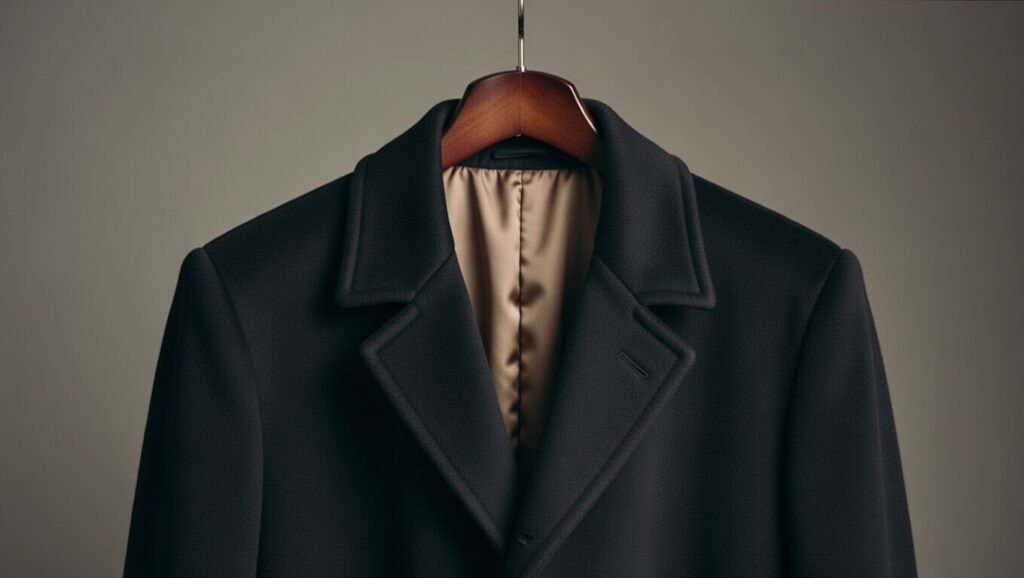
The results of non-toxic dry cleaning before after restoration speak for themselves.
Visible improvements in Mrs. Sharma’s coat:
- Richer color: The faded camel brown transformed back to deep, warm camel
- Restored softness: Stiff, scratchy wool became soft and luxurious again
- Odor-free fabric: Not a trace of musty smell remained
- Structured silhouette: Shoulders stood proud, lapels crisp, overall shape perfect
- Clean lining: Yellow-brown lining became cream silk again
- Like-new drape: The coat moved and flowed naturally, not stiff
The emotional impact:
When Mrs. Sharma picked up her mother’s coat, she didn’t recognize it at first. “Is this really the same coat?” she asked. When she tried it on, she teared up. “It fits perfectly. It smells clean. It feels exactly how I remember my mother wearing it.”
That’s what vintage coat restoration non-toxic methods can achieve – not just clean clothes, but preserved memories.
Investment protection:
Mrs. Sharma later discovered similar vintage wool coats from the 1980s selling for ₹12,000-₹18,000 in vintage boutiques. She’d spent ₹2,800 on professional restoration instead of buying new. And hers had sentimental value that money can’t buy.
Real before-after comparison:
| Before Restoration | After Restoration |
| Faded, patchy color | Rich, even original color |
| Musty storage smell | Fresh, clean, no odor |
| Stiff, scratchy texture | Soft, comfortable wool |
| Yellow, aged lining | Clean, like-new lining |
| Sagging shoulders | Structured, sharp silhouette |
| Unwearable condition | Ready to wear proudly |
This is why choosing professional non-toxic cleaning makes such a difference. You’re not just getting a coat cleaned – you’re getting a piece of history brought back to life. The dramatic results clearly demonstrate How Vanzoo’s Non-Toxic Methods Revived a Vintage Coat from faded and forgotten to wearable and elegant again.
How Much Does It Cost to Restore Damaged Vintage Clothes?
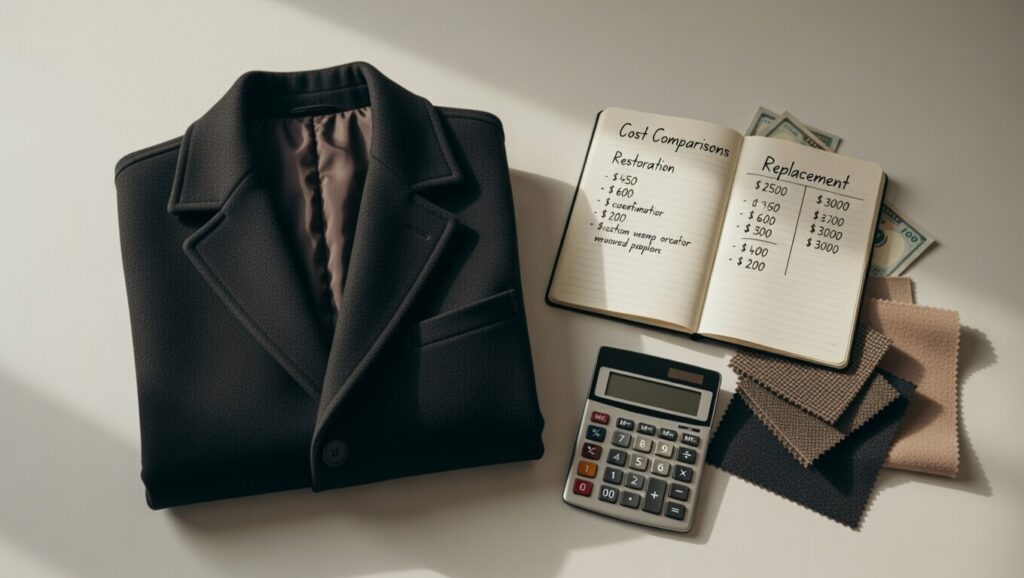
Let’s talk money. Is professional vintage restoration worth the cost?
Cost depends on several factors:
- Type of fabric: Wool is different from cashmere, which is different from vintage tweed blends
- Severity of damage: Light stains cost less than heavy oxidation and structural issues
- Stain type: Simple dirt is easier than oil or rust stains
- Structural repair needs: Does it need shoulder rebuilding? Lining repair?
- Coat length and complexity: Long coats with intricate details cost more
Estimated price ranges in India:
| Service Level | What’s Included | Price Range |
| Basic professional cleaning | Standard dry cleaning, light deodorizing | ₹600 – ₹1,500 |
| Stain-intensive restoration | Heavy pre-treatment, oxidation removal, deep cleaning | ₹1,500 – ₹3,000 |
| Full structured restoration | Complete cleaning, restructuring, finishing, repairs | ₹2,000 – ₹4,500+ |
Mrs. Sharma’s coat cost: ₹2,800 for full restoration including stain removal, odor treatment, cleaning, and restructuring.
Value comparison – restoration vs. replacement:
A new high-quality wool coat today: ₹8,000 – ₹25,000 A vintage coat with same quality craftsmanship: Hard to find, ₹12,000+ in vintage stores Professional restoration of your existing vintage coat: ₹2,000 – ₹4,500
The math makes sense. Restoration is far more affordable than replacing quality you can’t find anymore.
Why premium services cost more – and why it’s worth it:
Cheap dry cleaners charge ₹300-₹500 but use harsh chemicals, rush the process, and don’t specialize in vintage restoration. You might save ₹1,500 upfront but risk permanent damage to an irreplaceable coat.
Premium cleaning services like Vanzoo focus on long-term garment preservation rather than quick surface cleaning. They invest in:
- Non-toxic cleaning equipment
- Trained specialists who understand vintage fabrics
- Gentle, time-intensive processes
- Quality control at every step
- Proper assessment before cleaning
Cost vs. value mindset:
Think about cost-per-wear. If restoration costs ₹3,000 and you wear the coat for 10 more years (roughly 50 wears), that’s ₹60 per wear. Compare that to buying a new ₹15,000 coat – same calculation, ₹300 per wear.
Plus, you can’t put a price on sentimental value.
Customer perspective: “I was hesitant about spending ₹2,800 on cleaning,” Mrs. Sharma admitted. “But my mother’s coat is worth so much more than that to me. And seeing it perfect again? Absolutely priceless. I’d pay double.”
When you compare restoration to replacement, it becomes clear why How Vanzoo’s Non-Toxic Methods Revived a Vintage Coat is a smart long-term investment.
Why Non-Toxic Methods Matter for Vintage Garments

You might wonder: why does it matter if the cleaning is non-toxic or not? Isn’t clean just clean?
Not when it comes to vintage fabrics.
How traditional dry cleaning damages vintage clothes:
Traditional dry cleaning uses perchloroethylene (called “perc”) – a harsh chemical solvent. It cleans well but:
- Strips natural oils from wool and cashmre, making them brittle
- Leaves chemical residue in fabric fibers
- Can cause color fading over multiple cleanings
- Weakens already-fragile vintage fibers
- Harsh on delicate vintage dyes
Benefits of non-toxic hydrocarbon cleaning:
- No harsh chemical residue: Clothes don’t smell like chemicals
- Protects fiber strength: Gentle solvents don’t break down wool or cashmere
- Prevents long-term breakdown: Natural fiber oils are preserved
- Safer for skin: No toxic residue against your body
- Better for environment: Eco-friendly disposal, no toxic fumes
Green dry cleaning vintage garments isn’t just a marketing term – it’s a different approach that prioritizes fabric longevity.
The longevity difference:
Vintage coats cleaned 5 times with harsh chemicals show visible fiber degradation. The same coat cleaned 5 times with non-toxic methods stays strong and soft.
Think long-term. You want this coat to last another 20 years, maybe pass it down to your children. Sustainable dry cleaning results mean your vintage pieces survive for generations, not just seasons.
Health angle:
Vintage coats sit against your skin for hours. Do you want chemical residue seeping into your body all day? Non-toxic cleaning means truly clean clothes with nothing harmful left behind.
Environmental responsibility:
Every time you choose eco-friendly cleaning, you’re reducing toxic chemical release into water systems and air. Small choice, big impact over time.
Customer testimonial: “I can actually smell the difference,” said Mr. Kapoor after getting his vintage blazer back from Vanzoo. “No chemical smell at all. Just clean fabric. And it feels softer than when I sent it in. That never happened with my old dry cleaner.”
When Should You Choose Professional Restoration?
Not every coat needs professional restoration. But vintage coats? Almost always.
Choose professional restoration if your coat has:
- Been stored for years: Storage always causes some degradation
- Visible yellowing: Oxidation stains won’t come out with home methods
- Musty smell: Deep odors need professional deodorizing
- Structured design: Shoulder pads, chest padding, or tailored shape
- High sentimental value: Irreplaceable memories deserve expert care
- Expensive purchase: Protect your investment properly
Warning signs you need help now:
| Sign | What It Means | Action Needed |
| Strong musty odor | Deep-set storage smell | Professional deodorizing |
| Yellow/brown patches | Oxidation from aging | Pre-treatment + cleaning |
| Stiff, scratchy feel | Dried-out natural fibers | Gentle restoration |
| Sagging shoulders | Lost structure | Steam restructuring |
| Faded, dull color | Dirt buildup, dye aging | Professional cleaning |
When DIY might be okay:
If you have a modern coat (less than 10 years old), made of synthetic fabric, with no sentimental value, and the care label says “machine washable” – then careful home washing might work.
But vintage coats? The risk is too high.
Risk assessment:
Ask yourself: If this coat gets ruined, can I replace it? If the answer is no – whether for sentimental or rarity reasons – don’t risk DIY.
Early action saves money:
Light stains and mild odor cost less to fix than severe damage. Don’t wait until your vintage coat is in terrible shape. Address issues early and restoration is easier and cheaper.
Real decision: Anjali had her grandmother’s 1960s coat. It smelled a bit musty but wasn’t terrible. She almost tried washing it at home. Instead, she got it professionally assessed. Good thing – they found hidden oxidation stains that would have set permanently if washed. Restoration cost ₹2,200. Saved her grandmother’s coat from irreversible damage.
Common Mistakes People Make with Vintage Coats

https://share.google/auIIyV9r6lKsxKlBX
Even people with good intentions ruin vintage coats by making these common errors.
Mistake 1: Washing “Just Once”
“It’s just one wash, how bad can it be?”
Very bad. As we’ve seen, one home wash can shrink wool permanently, collapse structure, and fade colors beyond repair. Vintage fabrics are fragile – they don’t get a second chance.
Mistake 2: Using Hot Water
Hot water is death for wool vintage coats. It causes extreme felting and shrinkage. Even warm water is risky. If you absolutely must spot-clean at home (not recommended), use only cold water.
Mistake 3: Aggressive Brushing
Stiff brushing damages vintage fabric fibers. Yes, you want to remove dirt, but rough brushing breaks down already-weakened wool. Use soft brushes and gentle strokes only.
Mistake 4: Plastic Storage
Storing vintage coats in plastic garment bags or plastic storage boxes is a huge mistake.
Why plastic is bad:
- Traps moisture, causing mildew
- Prevents air circulation
- Can cause yellowing from chemical interaction
- Creates perfect environment for musty odors
Always use breathable cotton garment bags for vintage storage.
Mistake 5: Ignoring Early Stains
“It’s just a small spot, I’ll deal with it later.”
Later becomes never. Or worse, later becomes “the stain is now set permanently and professional cleaning can’t remove it.”
Oxidation stains start light and get darker over time. Oil stains penetrate deeper. Treat stains immediately, or at least get professional assessment soon.
Mistake 6: Storing Without Cleaning
Never store a vintage coat for the season without cleaning it first. Body oils, invisible dirt, and food particles all oxidize during storage and create permanent yellow-brown stains.
Mistake 7: DIY Stain Removal Experiments
Internet advice like “use baking soda and vinegar” or “try lemon juice” might work on modern clothes. On vintage fabrics, these home remedies often cause more damage – color fading, fiber weakening, or setting stains permanently.
Costly example: Vikram found a wine stain on his father’s vintage coat. He tried rubbing alcohol to remove it (bad idea). The alcohol stripped the dye, creating a light patch worse than the original stain. Professional assessment afterward: “If he’d brought it to us with just the wine stain, we could have removed it completely. Now the dye damage is permanent.”
| Common Mistake | Why It’s Bad | What to Do Instead |
| Home washing | Shrinkage, structure loss | Professional cleaning only |
| Hot water | Extreme felting | Never – use cold or get professional help |
| Plastic storage | Mildew, yellowing | Breathable cotton bags |
| Ignoring stains | Stains set permanently | Immediate professional treatment |
| DIY stain removal | Can make it worse | Get expert assessment |
Conclusion: Your Vintage Coat Can Live Again
Vintage garments aren’t just clothing – they’re craftsmanship from another era, memories stitched into fabric, connections to people we love.
The story of how Vanzoo’s non-toxic methods revived a vintage coat shows what’s possible. From faded, musty, unwearable condition to beautiful, fresh, ready-to-wear again – professional restoration brings forgotten pieces back to life.
Key lessons from this transformation:
With the right restoration method, even a neglected piece stored for years can feel new again. Non-toxic cleaning protects vintage fibers while removing decades of dirt, odor, and stains.
Choosing professional care ensures your vintage pieces last for years, not just seasons. The gentle, expert approach prevents the permanent damage that home washing almost always causes.
Your vintage coat deserves expert care:
If you have a vintage coat sitting in your closet – faded, smelly, stiff, or just forgotten – it’s not too late. Most damage can be restored if you act before it becomes irreversible.
The transformation Mrs. Sharma’s coat went through isn’t unique. It happens every time someone chooses professional restoration over DIY risks or giving up entirely.
Making the decision:
If you’re unsure whether your vintage coat can be saved, a professional assessment can make all the difference. Experts can tell you what’s possible, what it will cost, and whether restoration makes sense.
Most people are surprised by how affordable it is compared to replacement. And when they see their beloved coat looking beautiful again, they wonder why they waited so long.
Your vintage coat has history. It has stories. With proper care, it can have many more years ahead.
Frequently Asked Questions
Q: Can a vintage coat be restored after being damaged? Yes, most vintage coat damage can be restored if caught early. Musty odors, oxidation stains, stiffness, color dullness, and structural sagging usually respond well to professional non-toxic cleaning. However, severe fiber breakdown, extreme shrinkage, and chemical burns may be permanent. Early intervention increases success significantly.
Q: How much does professional vintage coat restoration cost in India? Basic professional cleaning costs ₹600-₹1,500. Stain-intensive restoration with heavy pre-treatment ranges ₹1,500-₹3,000. Full structured coat restoration including cleaning, restructuring, and finishing costs ₹2,000-₹4,500+. Cost depends on fabric type, damage severity, and coat complexity. Still far cheaper than replacing quality vintage pieces.
Q: What is non-toxic dry cleaning and why is it better for vintage clothes? Non-toxic dry cleaning uses hydrocarbon-based solvents instead of harsh chemicals like perchloroethylene. It protects fiber strength, preserves natural oils in wool and cashmere, leaves no chemical residue, and prevents long-term fabric breakdown. This gentle approach is crucial for already-fragile vintage garments.
Q: Can you remove musty smell from vintage coats? Yes, professional non-toxic dry cleaning effectively removes musty storage odors. The cleaning process eliminates odor-causing bacteria and mildew without harsh chemicals. Home methods like airing out rarely work for deep-set smells. Proper professional deodorizing restores fresh, clean-smelling fabric completely.
Q: Why shouldn’t you wash vintage wool coats at home? Home washing causes wool fibers to felt (permanently shrink and mat together), typically shrinking coats 10-30%. It also distorts linings, collapses padding, causes dye bleeding, and weakens fragile vintage fibers. Even gentle cycles and cold water carry high risk. Professional cleaning is the only safe option.
Q: How long does vintage coat restoration take? Complete professional restoration typically takes 7-14 days. This includes assessment (1 day), pre-treatment (1-2 days), non-toxic cleaning (2-3 days), steam restructuring (2-3 days), and quality checks (1 day). Rush services may be available but allowing proper time ensures best results without damaging fabric.
Q: What are oxidation stains on vintage clothes? Oxidation stains are yellow or brown discolorations from aging, exposure to air, body oils, or storage conditions. They worsen over time and become darker and more set. Professional pre-treatment can often remove or significantly reduce oxidation stains if addressed before they become extremely severe.
Q: Can vintage coat colors be restored if faded? Professional cleaning can revive dull colors by removing dirt buildup and grime that masks original vibrancy. However, cleaning cannot restore dye that has chemically degraded or been bleached by sunlight. Proper cleaning brings back as much original color as the remaining dye allows.
Q: Is eco-friendly dry cleaning effective for heavily soiled vintage coats? Yes, eco-friendly hydrocarbon cleaning is highly effective even for heavily soiled vintage garments. The gentle solvents penetrate fabric to lift dirt, oils, and stains without harsh agitation. Combined with targeted pre-treatment, green cleaning methods achieve excellent results while protecting delicate vintage fibers.
Q: When is vintage coat damage too severe to restore? Damage may be irreversible when fibers are completely broken down and brittle, synthetic blends are melted from heat, deep chemical burns exist, or extreme shrinkage (3+ sizes) has occurred. Large moth holes can be repaired by tailors but aren’t “restoration.” Professional assessment determines if restoration is feasible.
Key Takeaways: Protecting Your Vintage Treasures
Your action plan for vintage coat care:
If your vintage coat needs help now:
- Don’t attempt home washing – the risks far outweigh any savings
- Get professional assessment to understand damage extent and restoration options
- Choose non-toxic cleaning services that specialize in vintage garments
- Act early – minor damage is easier and cheaper to fix than severe deterioration
For prevention going forward:
- Store in breathable cotton bags, never plastic
- Keep in cool, dry place away from sunlight
- Clean before seasonal storage, even if coat looks clean
- Address stains immediately with professional help
- Regular professional cleaning every 1-2 years maintains condition
Investment perspective:
Spending ₹2,000-₹4,500 on professional restoration protects vintage coats worth ₹12,000-₹25,000 in replacement value. Plus, you preserve sentimental value that’s truly priceless.
The transformation is real:
As Vanzoo’s sustainable dry cleaning results demonstrate, vintage coats can go from unwearable to beautiful again. From musty and faded to fresh and vibrant. From forgotten to favorite.
Your vintage coat deserves this care. The craftsmanship, the memories, the quality you can’t find anymore – all worth preserving properly.
Start today. Whether it’s assessment, cleaning, or just proper storage, take one step toward protecting your vintage treasures. Future you will be grateful.