
- Introduction
- What Happens When You Wash Velvet Pillow Covers at Home?
- Can All Types of Velvet Be Washed?
- Machine Wash vs Hand Wash: Which Is Safer for Velvet?
- How to Safely Clean Velvet Pillow Covers at Home
- Why Does Velvet Lose Its Softness After Washing?
- Can Crushed or Damaged Velvet Be Restored?
- When Should You Choose Professional Cleaning for Velvet Pillow Covers?
- How Much Does Professional Velvet Cleaning Cost?
- Common Mistakes That Ruin Velvet Pillow Covers
- How to Store Velvet Pillow Covers to Prevent Damage
- FAQs
- Conclusion- Can You Wash Velvet Pillow Covers?
Introduction
You just spilled coffee on your beautiful velvet pillow cover. Your first thought? “Can I just throw this in the washing machine?”
Hold on. Before you do that, you need to know this: velvet is not like regular cotton or polyester. Wash it the wrong way, and that soft, luxurious texture you love? Gone forever.
The short answer is: yes, some velvet can be washed, but it depends on the type of velvet and how you do it. This guide will show you exactly when you can wash velvet pillow covers at home, when you shouldn’t, and how to do it safely without ruining them.
What Happens When You Wash Velvet Pillow Covers at Home?
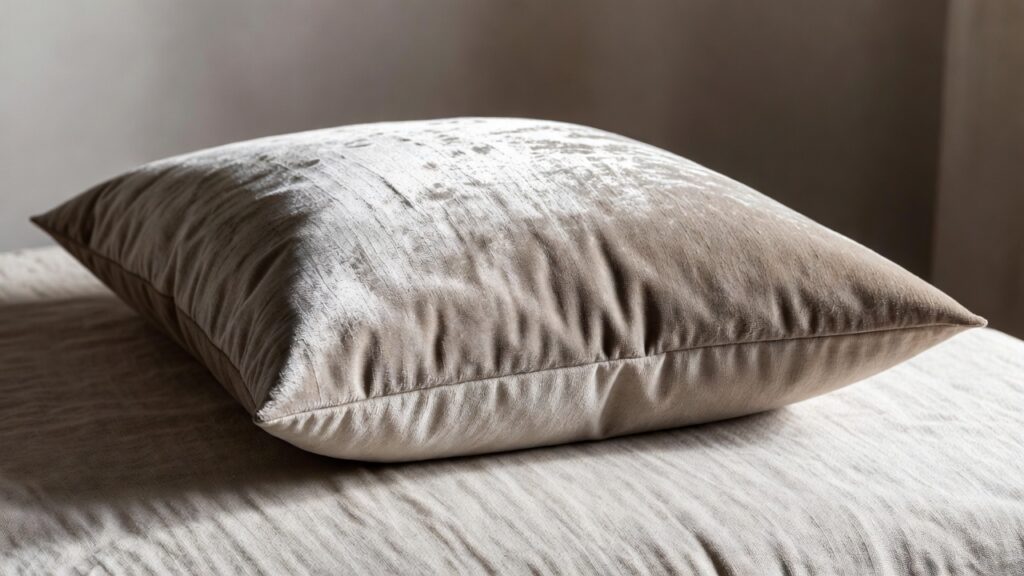
Velvet looks delicate because it actually is delicate. The fabric has tiny raised fibers (called “pile”) that stand upright to create that smooth, shiny surface. When water hits velvet, several things can go wrong fast.
Common damage from washing velvet:
- Texture crushing: The pile fibers get flattened and matted, losing that plush feel
- Water marks: Uneven drying creates permanent dark spots or rings
- Dye bleeding: Colors can run, especially with darker velvets
- Loss of sheen: The fabric loses its characteristic shine and looks dull
- Pile flattening: Fibers lie down instead of standing up, making it look worn out
Here’s what happened to my friend Anjali: She machine-washed her expensive maroon velvet cushion covers thinking they’d be fine. The fabric came out flat, the color faded in patches, and the soft texture was completely gone. The covers looked old and damaged even though they were just 6 months old.
The damage isn’t always immediate either. Sometimes velvet looks okay when wet, but once it dries, you see the crushed pile, water marks, and lost shine. By then, it’s too late to fix.
Why velvet reacts this way:
Velvet pile is made of thousands of tiny fiber loops standing upright. Water makes these fibers swell and stick together. Agitation in a washing machine crushes them down. Heat from dryers or hot water damages them permanently. That’s why velvet needs special care.
Can All Types of Velvet Be Washed?
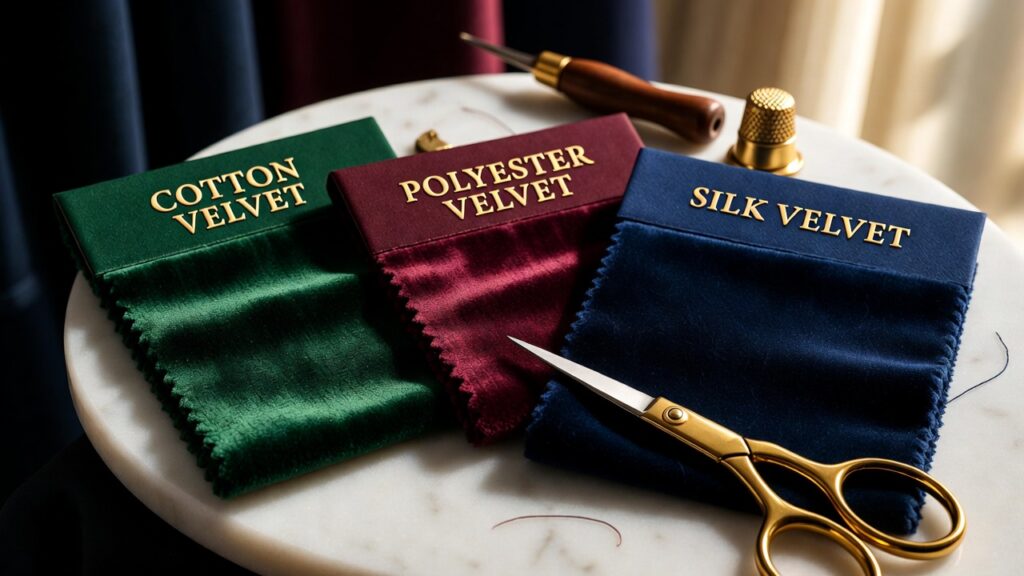
Not all velvet is the same. Some can handle gentle washing, others will get ruined. Knowing your velvet type is the first step before cleaning anything.
Can You Wash Cotton Velvet Pillow Covers?
Yes, cotton velvet is the most washable type. It’s more durable than silk velvet and can handle gentle cleaning at home.
How to wash cotton velvet safely:
- Use cold water only (hot water damages the pile)
- Hand wash or use delicate cycle if you must use machine
- Very mild detergent, no bleach
- Never wring or twist the fabric
- Air dry flat, never in dryer
Cotton velvet is what you’ll find in most affordable pillow covers from Home Centre, Fabindia, or online stores. It’s forgiving but still needs gentle handling.
Real example: My neighbor washes her cotton velvet cushion covers twice a year. She hand-washes them in cold water, lays them flat on a towel to dry, and they still look great after 3 years. The secret? She never rushes the process and never uses a machine dryer.
Is Polyester Velvet Machine Washable?
Polyester velvet is more forgiving than natural velvet, but you still need to be careful. Many synthetic velvets can go in the washing machine on delicate cycle.
Machine washing polyester velvet:
- Cold water, delicate/gentle cycle only
- Use mesh laundry bag to protect the fabric
- Mild detergent, half the normal amount
- Skip the spin cycle or use lowest speed
- Remove immediately and air dry
Most budget velvet pillow covers (₹300-₹800 range) are polyester or polyester blend. Check the care label – if it says “machine washable,” it’s usually polyester velvet.
Important note: Even polyester velvet can get crushed if you use regular cycle or hot water. Treat it gently even though it’s synthetic.
Why Silk Velvet Should Never Be Washed at Home
Silk velvet is the most expensive and delicate type. Washing it at home almost always causes damage.
Why silk velvet is different:
- Silk fibers are extremely delicate and sensitive to water
- Water causes immediate texture changes
- Dyes in silk velvet bleed very easily
- The pile crushes permanently with the slightest agitation
- Professional cleaning is the only safe option
If your velvet pillow cover costs ₹3,000 or more, or if the label says “dry clean only,” it’s probably silk velvet or has silk content. Don’t risk washing it at home.
Expensive lesson: Someone in my building washed her ₹5,000 silk velvet cushion covers thinking “it’s just water, how bad can it be?” The result was disastrous – permanent water marks, crushed pile, and faded color. The covers were completely ruined and had to be thrown away.
| Velvet Type | Can You Wash at Home? | How to Clean | Difficulty |
| Cotton velvet | Yes, carefully | Hand wash, cold water | Medium |
| Polyester velvet | Yes, with caution | Gentle machine wash or hand wash | Easy to Medium |
| Silk velvet | No | Professional dry cleaning only | High risk |
| Velvet blends | Depends on blend | Check care label first | Varies |
Machine Wash vs Hand Wash: Which Is Safer for Velvet?
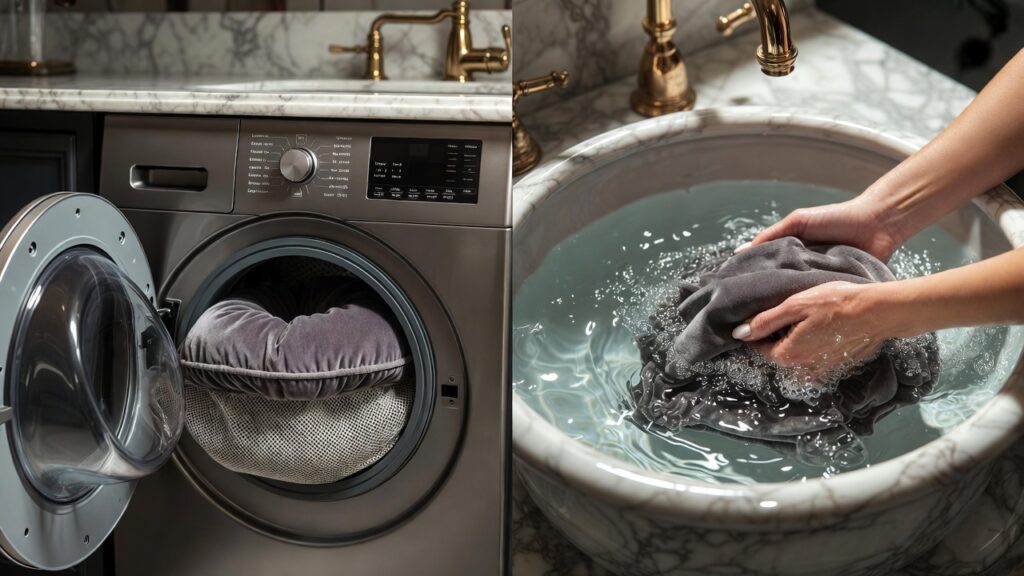
If you’ve decided your velvet can be washed (cotton or polyester), the next question is: machine or hand wash? Hand washing is almost always safer.
Problems with machine washing velvet:
- Agitation damage: The spinning action crushes the pile permanently
- Spin cycle risks: High-speed spinning distorts the fabric structure
- Excess water absorption: Velvet holds a lot of water, making it heavy and prone to stretching
- Pile distortion: The tumbling motion flattens fibers unevenly
Even on “delicate” cycle, washing machines are rougher than your hands. The agitator or drum movement puts pressure on the velvet pile that hand washing doesn’t.
When machine washing might be okay:
- Polyester velvet specifically labeled “machine washable”
- Using a mesh laundry bag
- Delicate cycle with cold water
- No other items in the load
- Removing immediately after cycle ends
Why hand washing is better for velvet:
You control the pressure, you can be extra gentle, and there’s no harsh spinning. Hand washing also uses less water, so drying time is shorter – which means less chance of water marks.
Quick comparison:
| Method | Safety Level | Best For | Risk Level |
| Hand wash | Safest | All washable velvets | Low |
| Machine delicate cycle | Moderate | Only polyester velvet | Medium |
| Regular machine cycle | Not safe | Never use for velvet | Very high |
| Dry cleaning | Safest overall | Silk velvet, expensive pieces | None |
Practical experience: I’ve hand-washed my velvet cushion covers about 10 times over 4 years. Not a single issue. My sister machine-washed similar covers just twice – both times she got some pile crushing and slight water marks. Hand washing takes 10 extra minutes but saves you from regret.
How to Safely Clean Velvet Pillow Covers at Home?
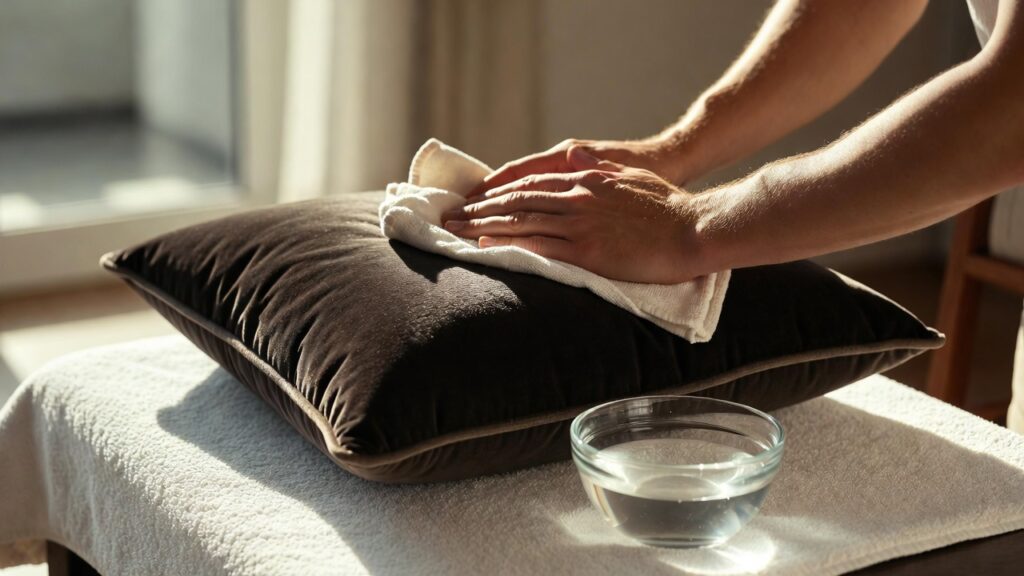
If you’re going to wash velvet at home, follow these exact steps. This method works for cotton and polyester velvet.
Step-by-step washing process:
1. Spot clean first (always try this before full washing):
- Mix cold water with tiny bit of mild detergent
- Dip clean white cloth in solution
- Gently blot the stain (never rub or scrub)
- Use another damp cloth to rinse
- Pat dry with towel
Many times, spot cleaning is enough and you don’t need to wash the whole cover.
2. If full wash is needed:
- Fill bucket or sink with cold water
- Add small amount of gentle detergent (Ezee or Woolite works well)
- Turn pillow cover inside out
- Submerge in water and gently press down
- Let it soak for 10-15 minutes
- Gently swish around, don’t scrub or twist
3. Rinsing:
- Drain soapy water
- Refill with clean cold water
- Press fabric gently to rinse
- Repeat rinse 2-3 times until water runs clear
- Never wring or twist – just press water out gently
4. Drying (most important step):
- Lay clean towel on flat surface
- Place velvet cover on towel
- Roll towel and cover together to absorb water
- Unroll and lay cover flat to air dry
- Keep away from direct sunlight
- Never hang (causes stretching)
- Never use dryer
Critical mistakes to avoid:
- Don’t use hot water (damages fibers)
- Don’t scrub stains (crushes pile)
- Don’t wring fabric (distorts shape)
- Don’t use dryer (ruins texture permanently)
- Don’t iron while damp (causes water marks)
Real-life example: Priya spilled curry on her velvet cushion cover. Instead of panicking and throwing it in the machine, she spot-cleaned the stain immediately with cold water and a soft cloth. The stain came out in 5 minutes, and she didn’t have to wash the whole cover. Sometimes the simple solution is the best one.
Why Does Velvet Lose Its Softness After Washing?

You washed your velvet pillow cover following all the rules, but it still doesn’t feel as soft. Why does this happen?
Science behind texture loss:
- Fiber swelling: Water makes velvet fibers expand and stick together instead of standing separate
- Crushed nap: The pile (raised fibers) gets pushed down and doesn’t bounce back
- Improper drying: Drying too fast or in wrong position sets fibers in flat position
- Heat damage: Even warm water can weaken velvet fibers and change texture
Think of velvet pile like grass. When grass is healthy, each blade stands up. Step on it, and it gets flattened. Sometimes it bounces back, sometimes it stays flat. Same with velvet – water and pressure flatten the fibers, and they don’t always recover.
Why some velvet loses softness more than others:
Cotton velvet is more resilient. Polyester velvet usually recovers better. Silk velvet almost never recovers once crushed. Quality matters too – expensive velvet often has better fiber construction that resists crushing.
What you might notice:
- Fabric feels rougher, not plush
- Surface looks dull instead of shiny
- Some areas feel flat or matted
- The luxurious drape is gone
My cousin washed her velvet cushion covers in slightly warm water instead of cold. They came out feeling rougher and looking less shiny. The damage wasn’t terrible, but the covers never felt as soft as before. That’s why cold water is non-negotiable.
Can Crushed or Damaged Velvet Be Restored?
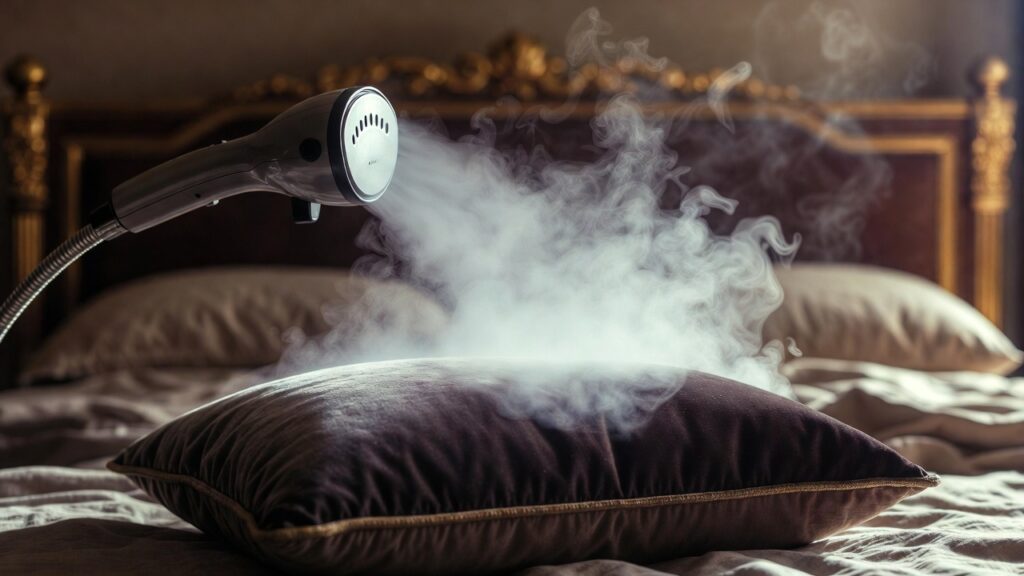
So your velvet got crushed or lost its texture. Is it permanently ruined? Sometimes you can fix it, sometimes you can’t.
Steam revival method (works 60-70% of the time):
- Hang the velvet cover or lay it flat
- Use garment steamer (not iron) from 6 inches away
- Steam gently, never touching fabric
- Brush pile lightly with soft brush while steaming
- Let dry completely before checking results
Steam can lift crushed pile fibers and restore some of the original texture. It works best on lightly crushed velvet, not severely damaged pieces.
When professional reshaping might help:
If steam doesn’t work, professional cleaners have special equipment – commercial steamers, pile-lifting brushes, and controlled drying systems. They can sometimes restore texture that home methods can’t fix.
When damage is permanent:
- Fabric has water marks that dried in
- Pile is extremely matted or felted
- Color has bled or faded in patches
- Fabric is stretched or distorted
- Fibers are damaged from heat
Early intervention importance:
The faster you act after damage, the better your chances of restoration. Velvet that’s been crushed and stored for months is harder to revive than velvet treated immediately.
Success story: My neighbor’s velvet cushion got crushed after her kid sat on it while damp. She immediately steamed it the next day and brushed the pile gently. About 80% of the texture came back. If she’d waited weeks, the fibers would have set in that crushed position permanently.
| Damage Type | Can It Be Fixed? | Method | Success Rate |
| Light crushing | Yes | Steam + brush | 70-80% |
| Water marks (fresh) | Maybe | Re-wet and dry properly | 50-60% |
| Severe matting | Difficult | Professional treatment | 30-40% |
| Heat damage | No | None | 0% |
| Color bleeding | No | None | 0% |
When Should You Choose Professional Cleaning like Vanzoo for Velvet Pillow Covers?
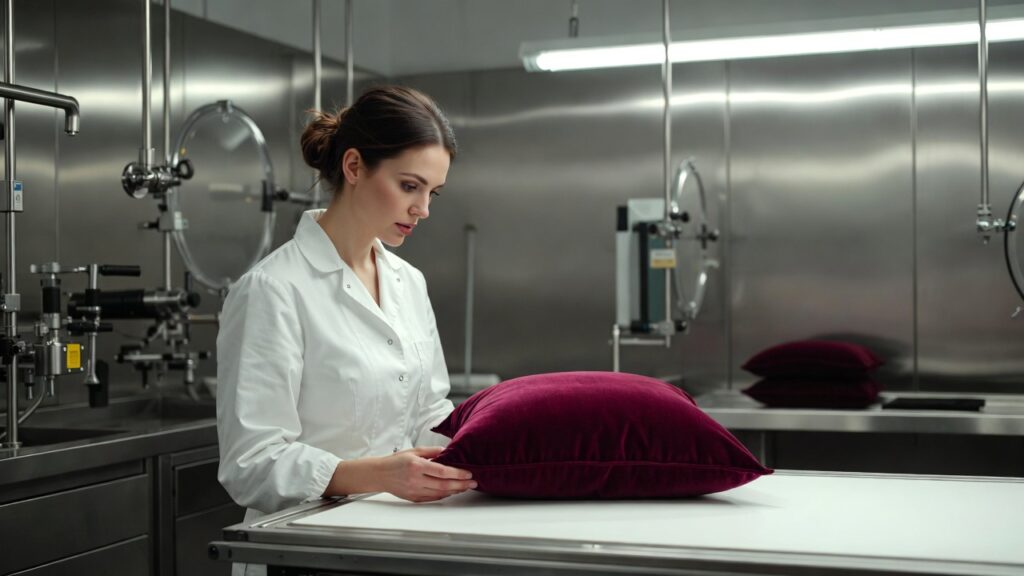
Some velvet is just too risky to wash at home. Here’s when you should take it to professionals.
Checklist – use professional cleaning if:
- Pillow cover costs ₹2,000 or more
- Label says “dry clean only”
- It’s silk velvet or contains silk
- Heavy stains like oil, wine, or ink
- You notice color bleeding when you spot-test
- Designer or antique velvet
- Embellished with beads, embroidery, or sequins
- You’re not confident about washing it yourself
Professional cleaners understand how to care for velvet. They use controlled cleaning systems that protect the pile structure, special solutions that don’t damage fibers, and proper drying techniques that prevent water marks.
What makes professional cleaning better:
Premium garment care specialists like VANZOO use controlled, non-toxic cleaning systems designed to protect delicate pile fabrics like velvet. They have equipment and expertise that home cleaning can’t match – specialized solvents, temperature-controlled drying, and professional pressing that restores texture.
When to definitely avoid home washing:
If your velvet pillow cover is part of an expensive sofa set, has sentimental value, or is designer velvet – don’t risk it. The ₹500-₹800 you spend on professional cleaning is nothing compared to replacing a ₹5,000 cushion cover.
Real scenario: Meera had beautiful wine-colored velvet covers from Sabyasachi – ₹6,000 for a set of two. When one got stained, she was tempted to wash it at home to save money. Instead, she spent ₹600 on professional cleaning. The covers came back perfect. Her friend washed similar expensive velvet at home and ruined it completely. Sometimes saving money costs you more.
How Much Does Professional Velvet Cleaning Cost?
Wondering if professional cleaning is worth it? Let’s talk about actual costs.
Cost factors that affect pricing:
- Fabric type: Silk velvet costs more to clean than polyester
- Stain severity: Heavy or set-in stains need special treatment
- Size: Larger cushion covers cost more
- Embellishments: Beaded or embroidered covers need extra care
- Location: Metro cities charge more than smaller towns
Approximate costs in India:
| Service Type | Price Range | Best For |
| Basic dry cleaning | ₹300-₹500 per cover | Polyester velvet, light stains |
| Premium dry cleaning | ₹500-₹800 per cover | Silk velvet, designer pieces |
| Stain removal treatment | ₹200-₹400 extra | Oil, wine, ink stains |
| Steam + reshaping | ₹300-₹600 | Crushed texture restoration |
Compare to replacement cost:
A good quality velvet cushion cover costs ₹1,500-₹3,000. Designer ones can be ₹5,000-₹10,000. Spending ₹500-₹800 on professional cleaning makes sense when the alternative is buying new covers.
Cost-benefit analysis example:
Rajesh had 4 velvet cushion covers worth ₹2,500 each (total ₹10,000). He got them professionally cleaned twice a year for ₹400 each (₹1,600 per year). After 5 years, his covers still look great. His friend replaced similar covers 3 times in 5 years (₹30,000 total) because he kept washing them wrong at home. Professional cleaning saved him ₹28,400.
When it’s worth paying more:
For everyday polyester velvet from budget stores, careful home washing might be fine. For expensive, silk, or designer velvet – professional cleaning is not optional, it’s necessary.
Common Mistakes That Ruin Velvet Pillow Covers
These are the biggest mistakes people make when cleaning velvet. Avoid these and you’ll save yourself from ruined cushions.
1. Scrubbing stains hard: When there’s a stain, people’s first instinct is to scrub it out. This crushes the velvet pile permanently. Always blot, never scrub. Pat the stain gently with a damp cloth – it works better and doesn’t damage fabric.
2. Using hot water: Hot water shrinks velvet, fades colors, and damages the pile structure. Always use cold water, no exceptions. Even warm water is too risky for delicate velvet.
3. Machine drying: Putting velvet in the dryer is one of the worst things you can do. The heat and tumbling will crush the texture completely. I’ve never seen velvet recover from a dryer – the damage is always permanent.
4. Ironing directly on velvet: Placing a hot iron on velvet creates shiny, flat patches that never go away. If you must remove wrinkles, steam from the back side or use a pressing cloth. Better yet, just use a steamer from 6 inches away.
5. Using harsh detergent: Regular detergents are too strong. They strip velvet’s natural softness and can fade colors. Use gentle detergents meant for delicates – Ezee, Woolite, or even baby shampoo works better.
6. Wringing or twisting wet velvet: Squeezing water out by twisting distorts the fabric shape and crushes pile fibers. Instead, press gently or roll in a towel to absorb water.
7. Hanging velvet to dry: Wet velvet is heavy. Hanging it causes stretching and distortion. Always dry flat on a towel, never on a hanger.
Story of what not to do: Kavita made every mistake in the book. She scrubbed a stain with hot water, threw the cover in the washing machine on regular cycle, then dried it in the dryer. The cover came out completely ruined – crushed texture, faded color, shrunken size. It took her 30 minutes to destroy a ₹2,000 cushion cover. Don’t be like Kavita.
How to Store Velvet Pillow Covers to Prevent Damage
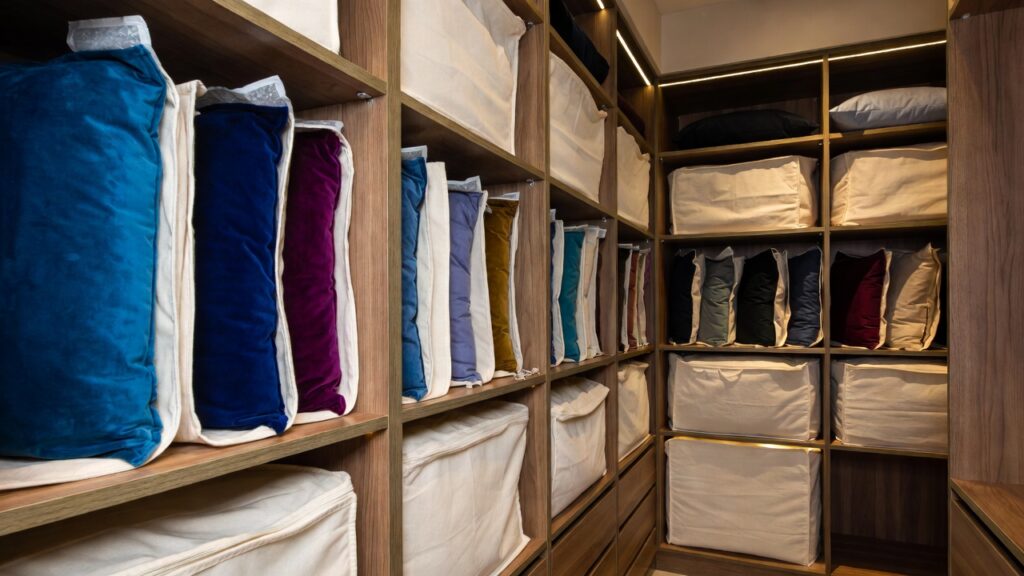
Even if you wash velvet perfectly, wrong storage can ruin it. Here’s how to store velvet cushion covers when not in use.
Breathable storage is essential:
- Use cotton or muslin bags, never plastic
- Plastic traps moisture and causes mildew
- Breathable fabric prevents that musty smell
- Air circulation keeps velvet fresh
Avoid compression:
- Don’t stack heavy items on top of velvet
- Pressure crushes the pile, even when dry
- Store loosely, not packed tight
- Give each piece some space
Humidity control matters:
- Store in dry area, away from dampness
- Use silica gel packets in storage bags
- Monsoon season needs extra care
- Moisture causes mildew and texture damage
No plastic wrapping:
Those plastic zipper bags? Bad idea for velvet. They trap moisture, prevent air flow, and can cause yellowing over time. Cotton storage bags from Home Centre or Amazon work much better.
Seasonal storage tips:
If you’re storing velvet cushion covers for months (like changing them seasonally), make sure they’re completely clean and dry first. Any stain or moisture left on fabric will set in during storage and become permanent.
Smart storage example: Deepa stores her winter velvet cushion covers in cotton bags with silica gel packets during summer. She keeps them in her wardrobe shelf, not compressed under other items. When winter comes, her covers still look and feel perfect – no musty smell, no texture loss.
| Storage Method | Good or Bad? | Why |
| Cotton/muslin bags | ✅ Good | Breathable, prevents moisture |
| Plastic bags | ❌ Bad | Traps moisture, causes mildew |
| Compressed storage | ❌ Bad | Crushes pile permanently |
| Open shelf | ✅ Good | Air circulation, easy access |
| Damp areas | ❌ Bad | Promotes mold growth |
Frequently Asked Questions
Q: Can you wash velvet pillow covers in washing machine? Yes, but only polyester velvet labeled “machine washable.” Use cold water, delicate cycle, and a mesh laundry bag. Never use regular cycle or hot water. Cotton velvet is better hand-washed. Silk velvet should never go in washing machine – it needs professional dry cleaning only.
Q: Does velvet shrink when washed? Yes, velvet can shrink, especially if washed in hot water. Cotton and silk velvet shrink more than polyester. Always use cold water and air dry flat to minimize shrinkage. Hot water or dryer heat causes significant shrinking that’s permanent and can’t be reversed.
Q: How do you clean velvet without ruining it? Spot clean small stains by gently blotting with cold water and mild detergent. For full cleaning, hand-wash in cold water with gentle detergent, never scrub or wring, and air dry flat. For expensive or silk velvet, professional dry cleaning is safest to prevent texture damage.
Q: Can velvet get wet in rain? Light rain won’t permanently ruin velvet, but it will leave water marks and flatten the pile temporarily. Shake off excess water, blot gently with towel, and let air dry naturally. Don’t use heat. Steam gently after drying to restore texture. Heavy rain can cause permanent damage.
Q: How do you restore crushed velvet pile? Use a garment steamer from 6 inches away, never touching the fabric. Steam the crushed area and gently brush with soft-bristle brush to lift fibers. Let dry completely. This works for light crushing. Severe crushing may need professional treatment or might be permanent.
Q: What detergent is safe for washing velvet? Use mild, gentle detergents like Ezee, Woolite, or delicate fabric wash. Avoid regular laundry detergents, bleach, or fabric softeners – they’re too harsh. Baby shampoo diluted in water also works well for hand-washing velvet pillow covers at home.
Q: Should I dry clean or wash velvet cushion covers? Dry clean silk velvet, expensive designer pieces, and anything labeled “dry clean only.” Hand-wash cotton or polyester velvet if care label says “washable.” When in doubt, dry cleaning is always safer. Cost of cleaning is less than replacing ruined covers.
Q: How long does velvet take to air dry? Velvet takes 24-48 hours to air dry completely when laid flat. Never rush drying with heat or sunlight – this damages texture. Keep in well-ventilated room away from direct sun. Thicker velvet takes longer. Ensure completely dry before storing to prevent mildew.
Q: Can you iron velvet pillow covers? No, never iron velvet directly – it creates shiny, crushed patches that are permanent. If you must remove wrinkles, use a garment steamer from 6 inches away or iron from the back with a pressing cloth on lowest setting. Steaming is always safer.
Q: Why does velvet look different after washing? Washing crushes the pile (raised fibers), causing texture loss and dull appearance. Water makes fibers swell and stick together instead of standing upright. Improper drying, agitation, or heat damage can permanently change velvet’s characteristic soft, shiny look. This is why gentle care is crucial.
Key Takeaways: Can You Wash Velvet Pillow Covers?

Taking care of velvet pillow covers doesn’t have to be scary once you know the rules. Here’s what to remember:
Before washing, always:
- Check the care label and fabric type
- Test spot cleaning first – it often solves the problem
- Identify if it’s cotton, polyester, or silk velvet
- When in doubt, choose professional cleaning
If washing at home:
- Use cold water only, never hot
- Hand wash is safer than machine
- Blot stains, never scrub
- Press water out gently, don’t wring
- Air dry flat on towel, never hang or use dryer
When to get professional help:
- Silk velvet or “dry clean only” labels
- Expensive or designer cushion covers
- Heavy stains or color bleeding
- Not confident about DIY cleaning
Remember: That ₹500-₹800 spent on professional cleaning can save you from replacing a ₹5,000 cushion cover. When it comes to velvet, being careful is always cheaper than replacing.
Velvet is beautiful but delicate. Treat it with gentle care, and your pillow covers will stay soft and luxurious for years.
Also See-