Some garments are more than just pieces of clothing—they’re priceless family heirlooms. A mother’s wedding saree, a grandmother’s silk shawl, a father’s sherwani, or a child’s christening outfit often carries memories that span generations. These treasured pieces deserve proper care so they can be admired and passed down for years to come.
Unfortunately, many heirloom garments suffer irreversible damage due to improper cleaning, poor storage, humidity, sunlight, insects, or aging fabrics. The good news is that with the right preservation techniques, you can significantly extend the life of these cherished items.
This guide explains how to clean, store, and protect family garments while preserving their beauty, craftsmanship, and sentimental value.
Why Heirloom Garment Preservation Matters
Unlike everyday clothing, heirloom garments often feature delicate fabrics and handcrafted embellishments that naturally weaken over time.
These garments may include:
- Wedding sarees
- Bridal lehengas
- Designer gowns
- Sherwanis
- Silk shawls
- Vintage jackets
- Handwoven textiles
- Traditional family attire
Without proper care, they can develop yellow stains, mold, fading, insect damage, weakened fibers, and permanent creases.
Preservation isn’t just about protecting fabric—it’s about protecting family history.
Always Clean the Garment Before Storage
One of the biggest mistakes people make is storing garments immediately after an event without cleaning them.
Even if the clothing appears spotless, invisible contaminants remain on the fabric, including:
- Sweat
- Body oils
- Perfume residue
- Makeup
- Food stains
- Dust
- Pollution particles
Over time, these residues oxidize, causing yellowing, discoloration, and fabric deterioration.
Professional garment cleaning before long-term storage greatly reduces the risk of permanent damage.
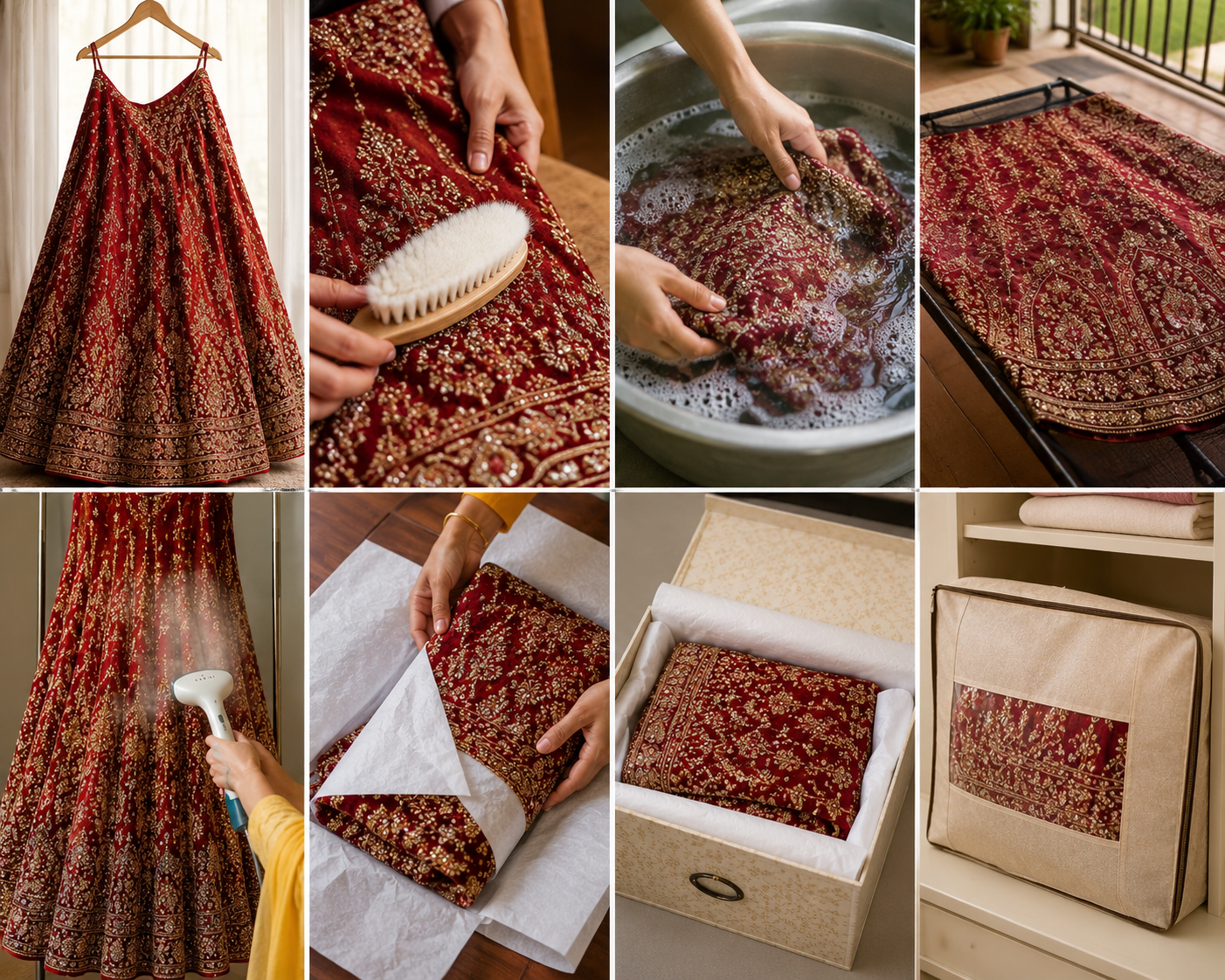
For delicate heirloom clothing, Vanzoo’s Dry Cleaning Service offers fabric-specific cleaning designed to preserve luxury garments and intricate detailing.
Choose the Right Cleaning Method
Not every heirloom garment should be washed the same way.
Different fabrics require specialized treatment, including:
- Silk
- Velvet
- Wool
- Organza
- Chiffon
- Linen
- Satin
- Cashmere
Similarly, decorative elements such as zari, sequins, beads, lace, pearls, and hand embroidery require careful handling.
Professional dry cleaning helps remove stains while protecting delicate fibers and embellishments from unnecessary stress.
Avoid Plastic Storage Bags
Plastic garment covers may seem protective, but they can actually trap moisture and restrict airflow.
Over time, this creates conditions that encourage:
- Mold growth
- Mildew
- Yellowing
- Unpleasant odors
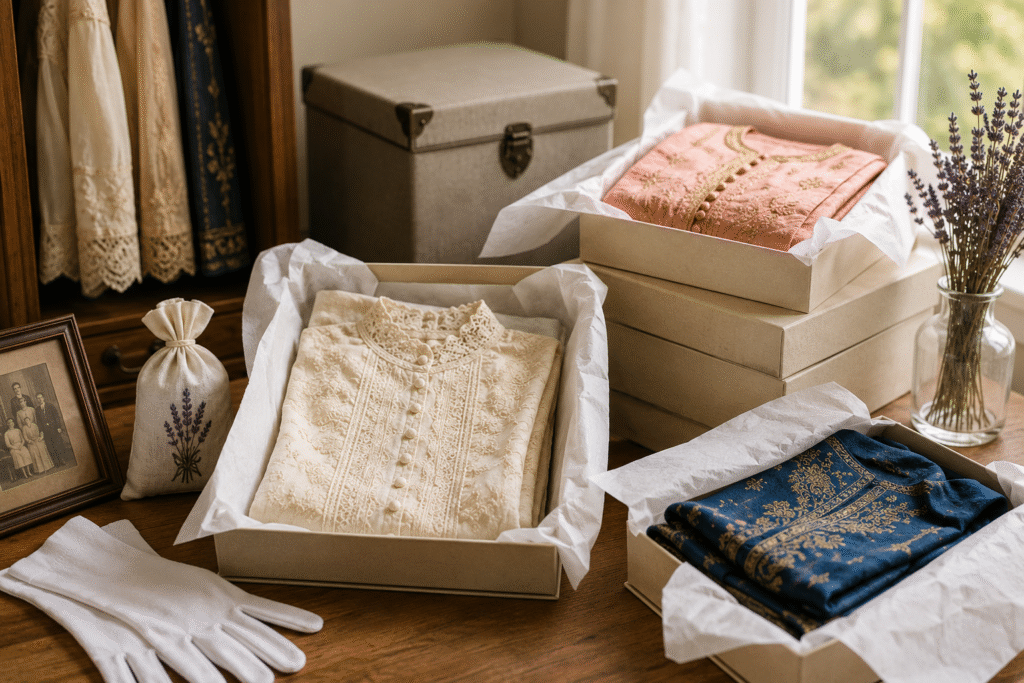
Instead, store heirloom garments in breathable cotton garment bags or archival-quality textile storage boxes.
Proper air circulation helps fabrics age more gracefully.
Store Garments in a Cool, Dry Environment
Temperature and humidity play a major role in fabric preservation.
Ideal storage conditions include:
- Cool temperatures
- Low humidity
- Good ventilation
- Stable indoor climate
- Protection from direct sunlight
Avoid storing valuable garments in:
- Attics
- Basements
- Garages
- Damp wardrobes
These environments often experience temperature fluctuations and excess moisture that accelerate fabric deterioration.
Use Acid-Free Tissue Paper
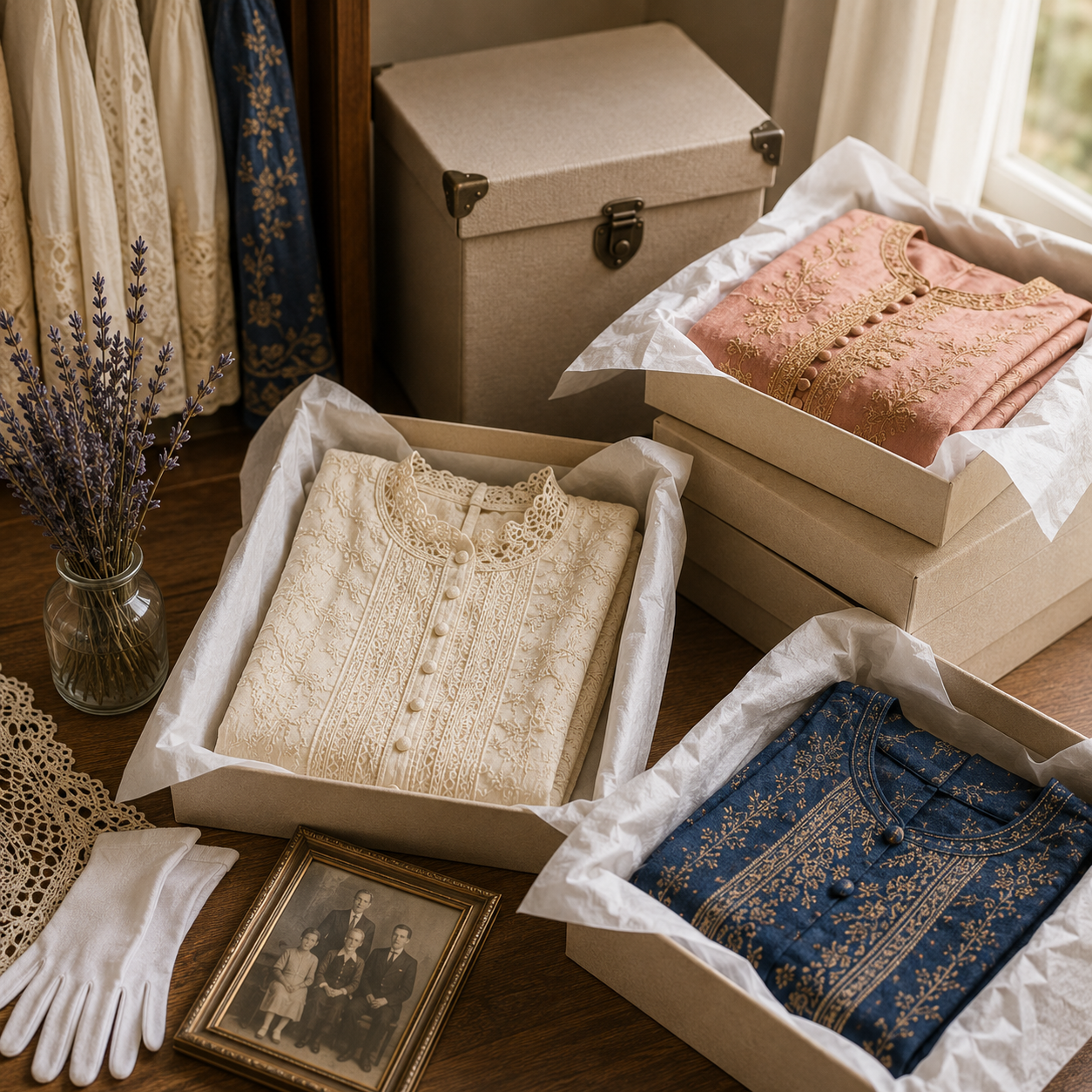
Acid-free tissue paper is one of the most effective tools for preserving heirloom garments.
Place tissue paper:
- Between garment folds
- Inside sleeves
- Around embroidery
- Inside structured bodices
This helps reduce pressure, prevent deep creases, and minimize fiber stress during long-term storage.
Avoid using newspaper or colored paper, as the ink and acids can transfer onto fabrics.
Protect Delicate Embroidery and Embellishments
Many heirloom garments feature intricate handcrafted details that require extra care.
These include:
- Zari work
- Stone embellishments
- Beadwork
- Mirror work
- Sequins
- Lace
- Pearl embroidery
Avoid stacking heavy garments directly on top of embroidered pieces, as the weight can crush decorative elements over time.
When folding, use soft tissue paper to cushion delicate embellishments.
Refold Stored Garments Periodically
Leaving a garment folded in exactly the same position for years can weaken fabric fibers along the fold lines.
Experts recommend gently unfolding and refolding heirloom garments every six to twelve months.
This simple practice distributes pressure more evenly and helps prevent permanent creasing.
Handle garments with clean, dry hands or wear cotton gloves to avoid transferring oils from your skin.
Keep Pests Away Naturally
Natural fibers such as silk, wool, and cashmere can attract insects if stored improperly.
To reduce the risk:
- Keep storage areas clean
- Ensure garments are completely dry before storage
- Inspect garments periodically
- Avoid placing garments near damp walls
Instead of placing mothballs directly on fabrics, consider safer storage solutions that won’t leave strong odors or chemical residues.
Should You Hang or Fold Heirloom Garments?
The answer depends on the garment.
Heavy bridal lehengas, wedding sarees, embroidered dresses, and sherwanis are usually better stored folded because hanging can stretch the fabric over time.
Lightweight garments with strong construction may be safely hung using padded hangers.
When in doubt, seek professional advice based on the garment’s fabric and weight.
The Benefits of Professional Garment Preservation
Professional preservation offers much more than ordinary cleaning.
Experienced garment care specialists inspect each item for:
- Fabric type
- Existing stains
- Weak stitching
- Delicate embellishments
- Structural concerns
Appropriate cleaning methods are then selected to remove contaminants while minimizing stress on fragile materials.
At Vanzoo, expert garment care helps preserve premium clothing using modern cleaning techniques tailored to luxury fabrics.
You can also explore Vanzoo’s Laundry Services for everyday garment care and visit the Blog for more fabric care guides and maintenance tips.
Common Mistakes That Damage Heirloom Clothing
Avoid these common preservation mistakes:
- Storing garments without cleaning them
- Using plastic garment covers
- Exposing fabrics to sunlight
- Folding garments without tissue paper
- Hanging heavy garments for years
- Storing clothes in damp environments
- Ignoring minor stains before storage
- Using harsh household cleaning products
Avoiding these mistakes can significantly extend the life of treasured garments.
Conclusion
Heirloom garments represent memories, traditions, and family history that deserve thoughtful care. Whether it’s a wedding saree passed down through generations, a bridal lehenga filled with cherished memories, or a handcrafted sherwani worn on a special occasion, proper preservation ensures these pieces remain beautiful for years to come.
By cleaning garments before storage, using breathable materials, controlling humidity, protecting delicate embroidery, and choosing professional garment care when needed, you can help safeguard your family’s treasured clothing for future generations.
Preserving heirloom garments isn’t just about maintaining fabric—it’s about preserving the stories woven into every thread.
Frequently Asked Questions
How should I store heirloom clothing for long-term preservation?
Store garments in a cool, dry place using breathable cotton garment bags or archival storage boxes with acid-free tissue paper.
Should heirloom garments be cleaned before storage?
Yes. Cleaning removes invisible stains, body oils, and contaminants that can cause discoloration and fabric damage over time.
Is dry cleaning safe for vintage and delicate clothing?
When performed by experienced professionals using fabric-appropriate methods, dry cleaning is one of the safest ways to care for many heirloom garments.
Can I use plastic covers for storing wedding clothes?
No. Plastic covers can trap moisture and increase the risk of yellowing, mildew, and fabric deterioration.
How often should I inspect stored heirloom garments?
Inspect garments every six to twelve months to check for moisture, pests, folds, or any signs of fabric deterioration.