A wedding saree is more than just a piece of clothing—it is a treasured memory woven with emotions, traditions, and special moments. Whether it’s a luxurious Banarasi silk, Kanjeevaram, designer saree, or a family heirloom, proper care is essential to maintain its beauty for years to come.
Unfortunately, many wedding sarees lose their shine, develop stains, or suffer fabric damage simply because they are not stored correctly. With the right preservation techniques, your wedding saree can remain as beautiful as the day you wore it and even become a cherished keepsake for future generations.
This complete guide explains everything you need to know about preserving a wedding saree safely and effectively.
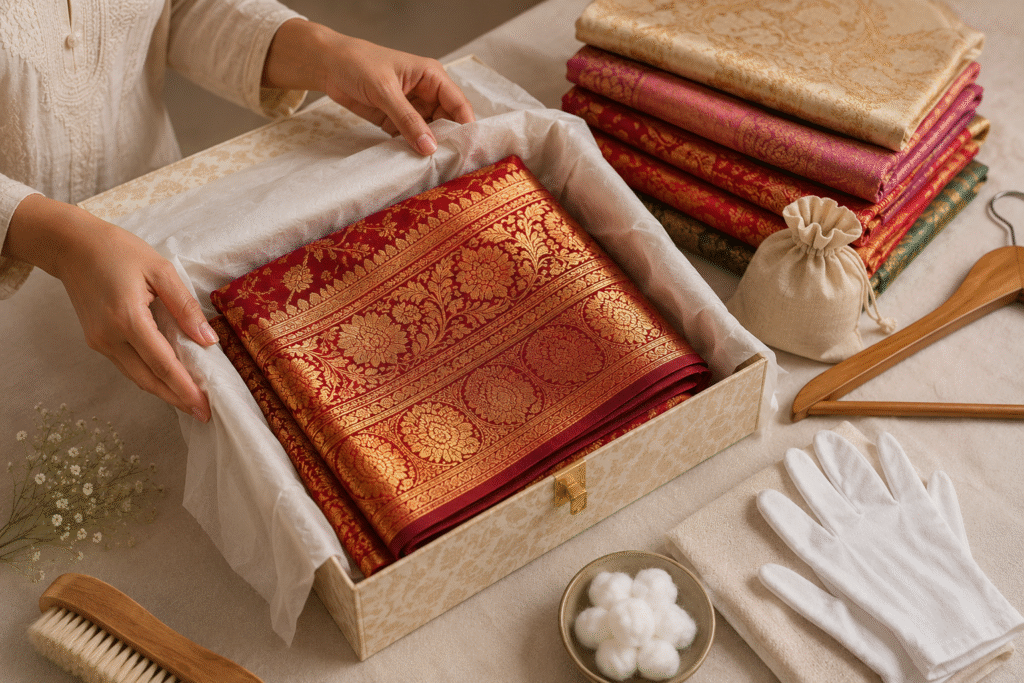
Why Wedding Saree Preservation Matters
Wedding sarees are often made from delicate fabrics such as silk, tissue, organza, georgette, velvet, or handwoven textiles. These materials require special care because they are vulnerable to:
- Yellowing over time
- Moisture damage
- Fabric weakening
- Mold and mildew
- Stains becoming permanent
- Tarnishing of zari work
- Color fading
Proper preservation protects your investment and helps maintain the saree’s original texture, color, and elegance.
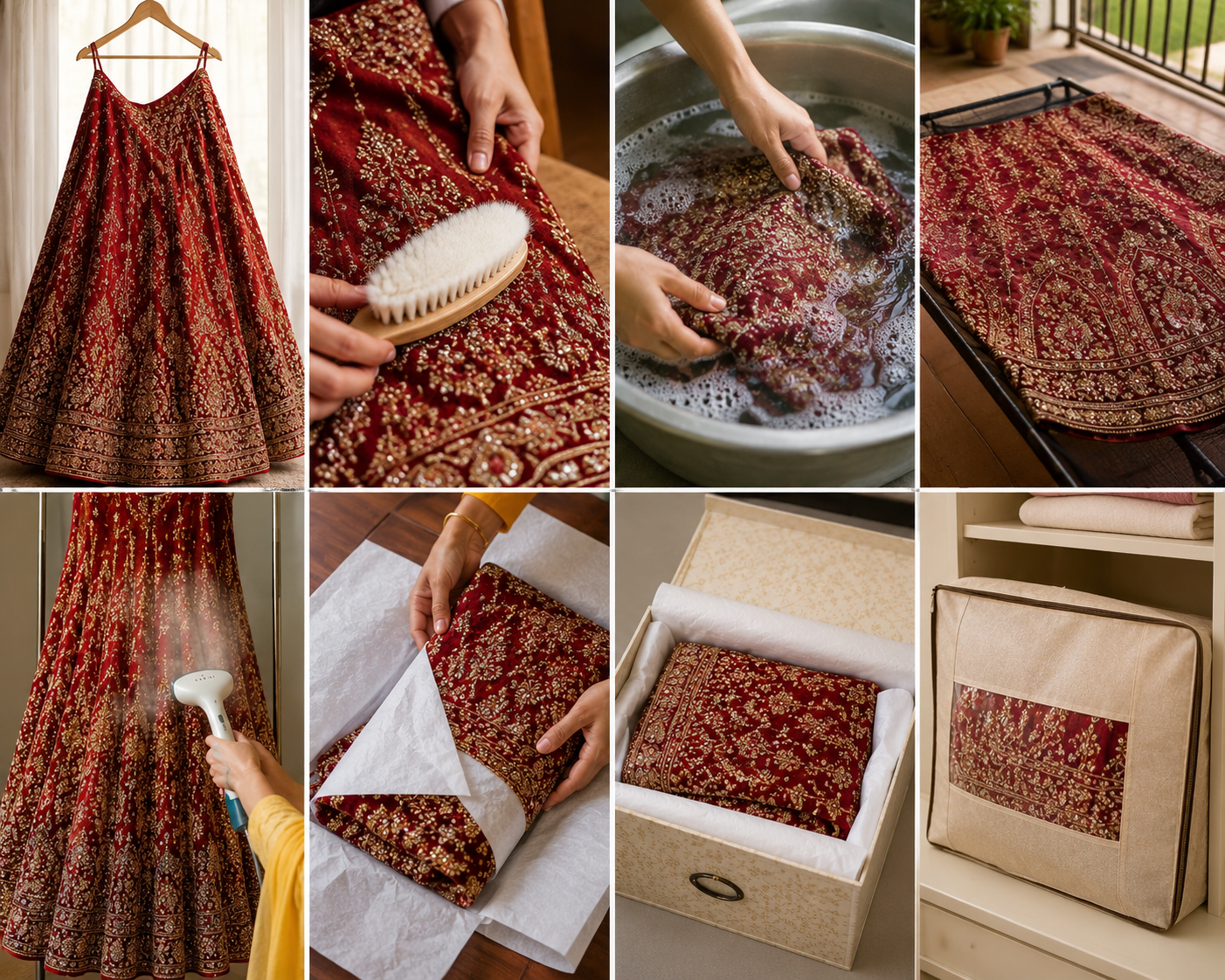
Step 1: Clean the Saree Before Storing
One of the biggest mistakes people make is storing a wedding saree immediately after the ceremony.
Even if the saree appears clean, it may contain:
- Sweat residue
- Perfume traces
- Makeup stains
- Food spills
- Dust and dirt
Over time, these invisible residues can cause permanent discoloration and fabric deterioration.
Professional cleaning is highly recommended before long-term storage. Delicate fabrics and intricate embroidery should be handled by experts who understand luxury garment care.
For premium fabric care, consider professional dry cleaning services from Vanzoo before preserving valuable wedding attire.
Step 2: Never Store the Saree in Plastic Covers
Plastic covers may seem protective, but they can trap moisture and restrict airflow.
This can lead to:
- Yellow stains
- Fabric discoloration
- Mold growth
- Unpleasant odors
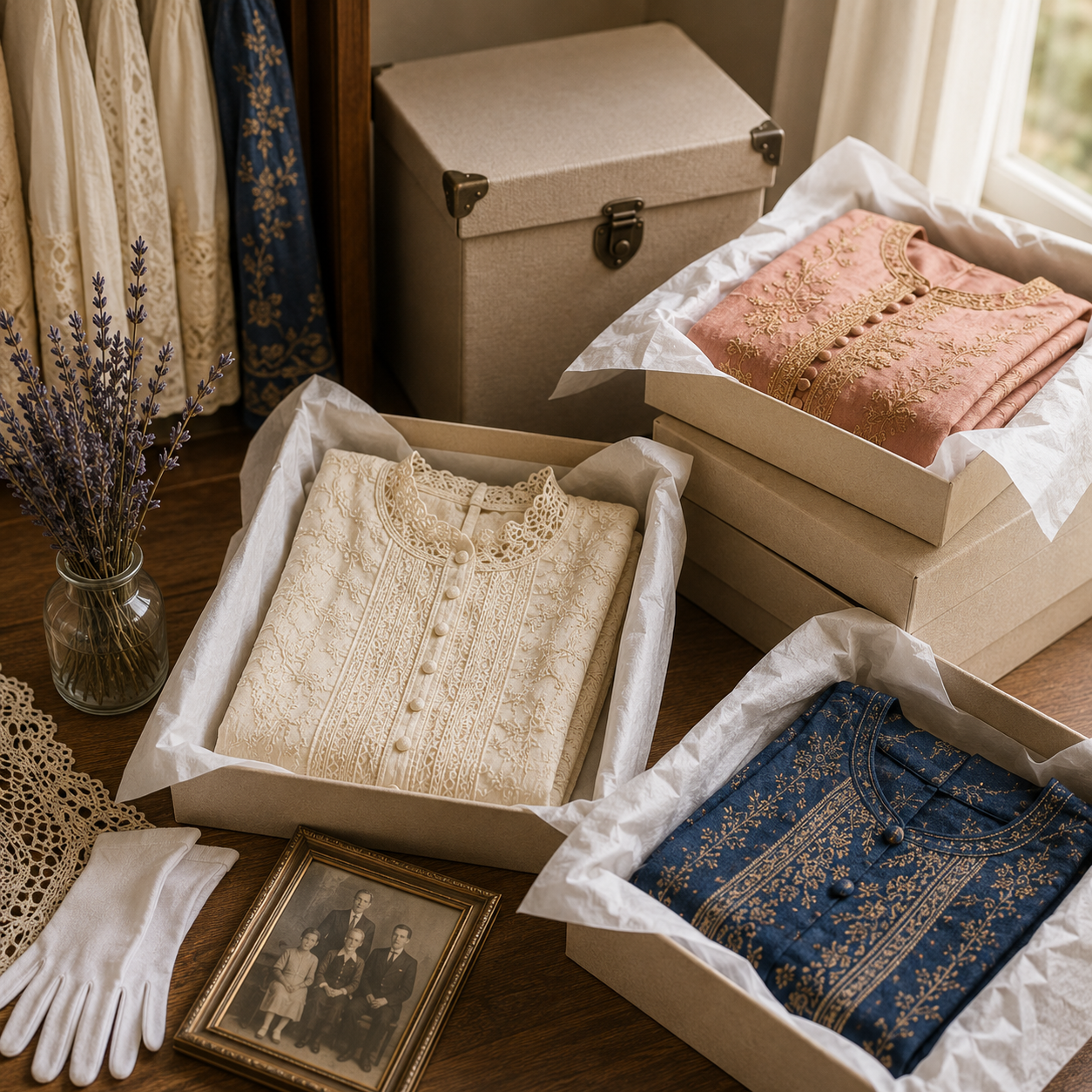
Instead, use:
- Muslin cloth bags
- Cotton garment covers
- Acid-free tissue paper
These materials allow the fabric to breathe while protecting it from dust.
Step 3: Wrap the Saree Properly
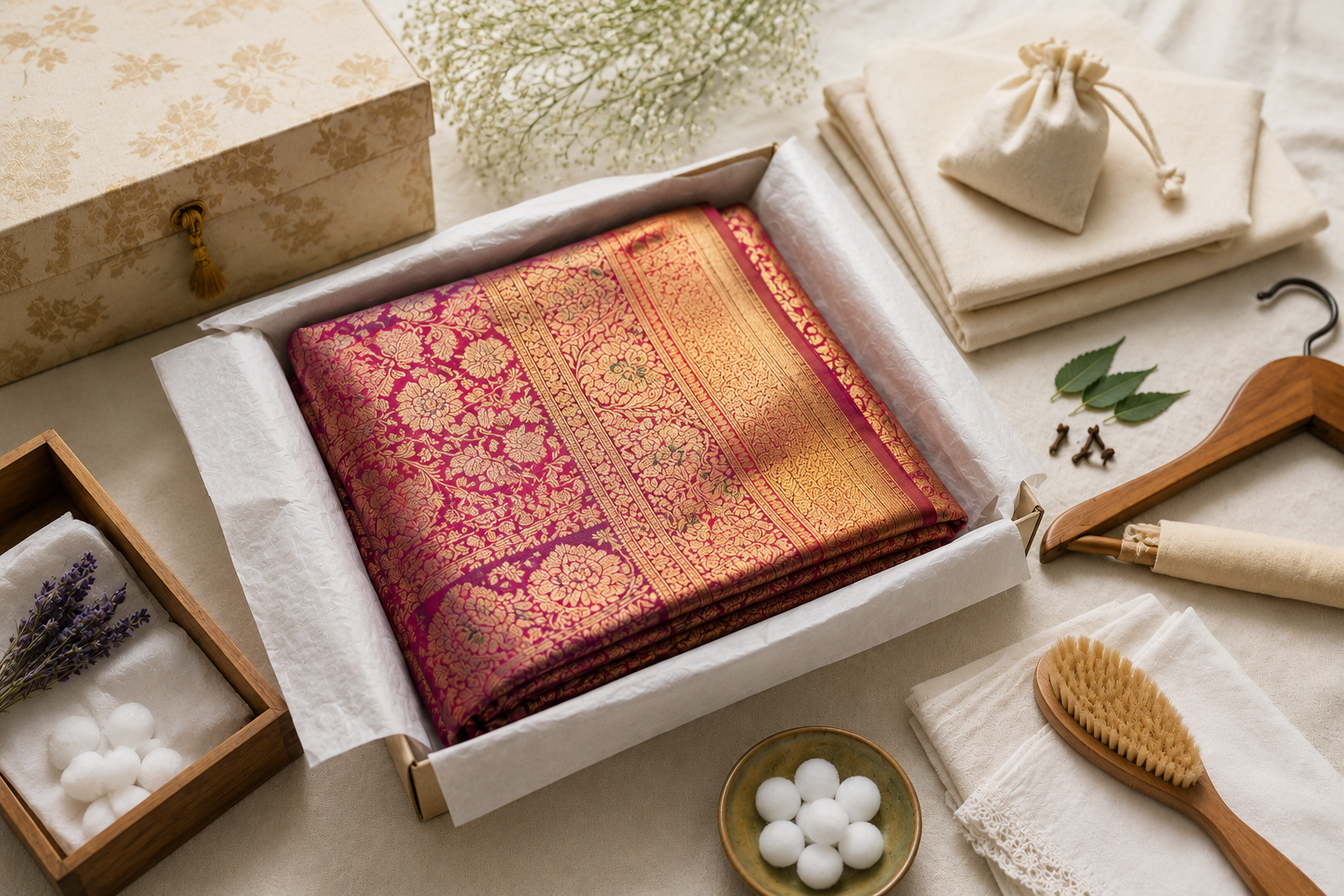
Before storing your wedding saree, carefully fold it and place acid-free tissue paper between the folds.
Benefits include:
- Preventing deep creases
- Reducing fabric stress
- Protecting embroidery and zari work
- Minimizing color transfer
For heavily embroidered sarees, extra cushioning with tissue paper helps maintain the shape of embellishments.
Step 4: Store in a Cool and Dry Place
Temperature and humidity play a major role in fabric preservation.
Avoid storing your wedding saree:
- Near windows
- In direct sunlight
- In damp cupboards
- In attics or basements
- Near heat sources
The ideal storage environment should be:
- Cool
- Dry
- Well-ventilated
- Away from direct sunlight
Consistent conditions help prevent fabric degradation and color fading.
Step 5: Protect the Zari Work
Gold and silver zari are often the most delicate elements of a wedding saree.
Over time, exposure to air and moisture can cause:
- Tarnishing
- Oxidation
- Loss of shine
To preserve zari:
- Wrap the saree in soft muslin cloth
- Avoid contact with perfumes
- Keep away from humidity
- Refold periodically to prevent stress on specific areas
Proper storage can significantly extend the life of intricate zari designs.
Step 6: Refold the Saree Every Few Months
Many people store their wedding sarees for years without touching them.
This can create permanent fold lines and weaken the fabric at stress points.
Experts recommend:
- Removing the saree every 3–6 months
- Refolding along different lines
- Checking for moisture or discoloration
This simple practice helps maintain fabric strength and appearance.
Step 7: Keep Away from Moth Damage
Natural fabrics like silk are attractive to insects and moths.
To protect your saree:
- Store it in a clean wardrobe
- Use natural repellents such as neem leaves or cedar blocks
- Avoid direct contact between repellents and the fabric
Regular inspection can help detect problems before significant damage occurs.
Step 8: Handle with Clean Hands
Whenever you take out your wedding saree, ensure your hands are clean and dry.
Oils, lotions, and dirt from hands can transfer onto delicate fabrics and create stains that become difficult to remove later.
For extremely valuable sarees, cotton gloves can provide additional protection.
Step 9: Avoid Hanging for Long-Term Storage
While hanging works well for some garments, it is generally not recommended for heavy wedding sarees.
Long-term hanging may:
- Stretch the fabric
- Distort the weave
- Damage embellishments
- Create stress on borders
Folded storage with proper support is usually the safest option.
Step 10: Schedule Professional Inspection and Cleaning
Even well-preserved wedding sarees benefit from occasional professional care.
A garment care expert can:
- Remove hidden stains
- Check for fabric damage
- Restore freshness
- Protect delicate embroidery
- Maintain the saree’s appearance
Professional cleaning every few years can significantly extend the lifespan of heirloom sarees.
You can also explore Vanzoo’s blog section for more fabric care and garment maintenance tips.
Common Mistakes to Avoid
Avoid these common wedding saree preservation mistakes:
- Storing without cleaning
- Using plastic covers
- Keeping sarees in humid areas
- Ignoring stains
- Folding the same way for years
- Exposing fabric to sunlight
- Using strong chemical moth repellents directly on fabric
Preventing these mistakes can save costly restoration work later.
How Long Can a Wedding Saree Last?
With proper preservation, a high-quality wedding saree can last for decades.
Many families successfully pass down wedding sarees through generations when they are:
- Professionally cleaned
- Carefully stored
- Protected from moisture
- Periodically inspected
A well-maintained wedding saree can become a priceless family heirloom.
Conclusion
Your wedding saree represents one of the most memorable moments of your life. Proper preservation ensures that its beauty, craftsmanship, and sentimental value remain intact for years to come.
By cleaning it before storage, using breathable fabrics for wrapping, protecting it from moisture and sunlight, and scheduling professional garment care when needed, you can keep your wedding saree looking stunning for future celebrations and generations.
Investing a little time in proper saree preservation today can protect a lifetime of memories tomorrow.
FAQs
How should I store my wedding saree long-term?
Store it in a muslin cloth or cotton bag with acid-free tissue paper in a cool, dry place away from sunlight and moisture.
Should I dry clean my wedding saree before storing it?
Yes. Professional cleaning removes stains, sweat, and residues that can cause long-term fabric damage.
Can I store a wedding saree in a plastic cover?
No. Plastic traps moisture and can lead to yellowing, mold growth, and fabric deterioration.
How often should I refold my wedding saree?
Experts recommend refolding every 3–6 months to prevent permanent creases and fabric weakening.
How do I protect zari work on a wedding saree?
Store the saree in breathable fabric covers, avoid humidity, and use acid-free tissue paper to reduce friction and tarnishing.